

One of the most challenging aspects of studying prehistoric cave walls is the sampling step which, despite extensive precautions, often falls short of meeting curators’ requirements. Sampling is ideally avoided or accepted only under micro-invasive conditions. This challenge is particularly significant in dating prehistoric rock painting, as laboratory analyses require direct sampling of the painting.
The uranium-thorium geo-chronometer offers an interesting alternative, as it allows to estimate the age of a painting without targeting it directly. Instead, it focuses on the precipitated carbonate, known as speleothems, which are abundant in their surroundings and may even overlay rock painting. The sampling step remains nevertheless a challenge, primarily because precise sampling is required, and because these analyses typically require at least mg-sized samples in optimal conditions.
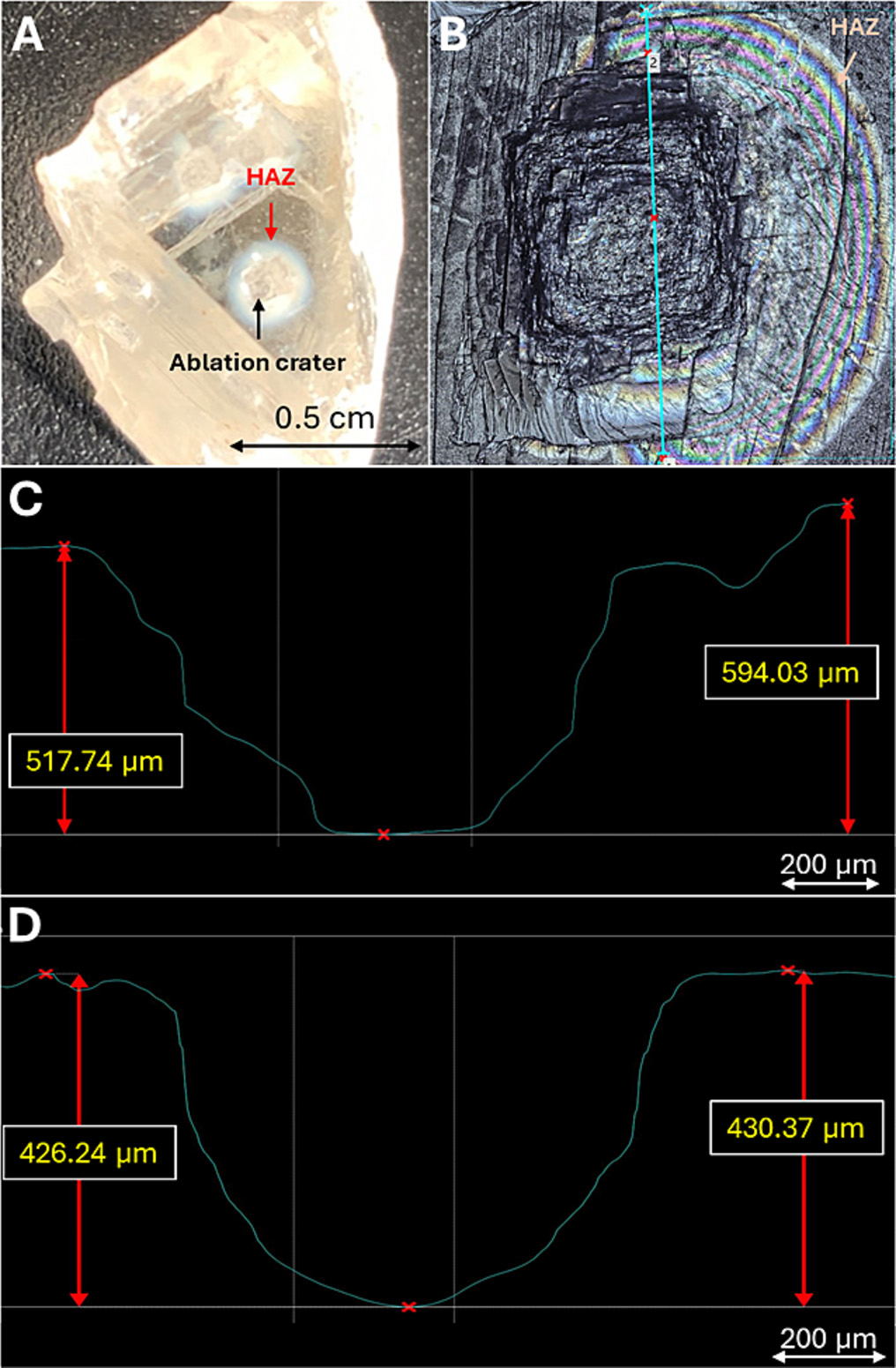
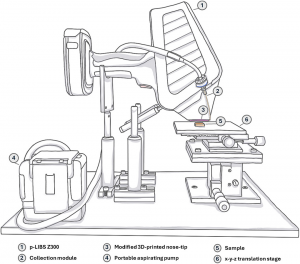
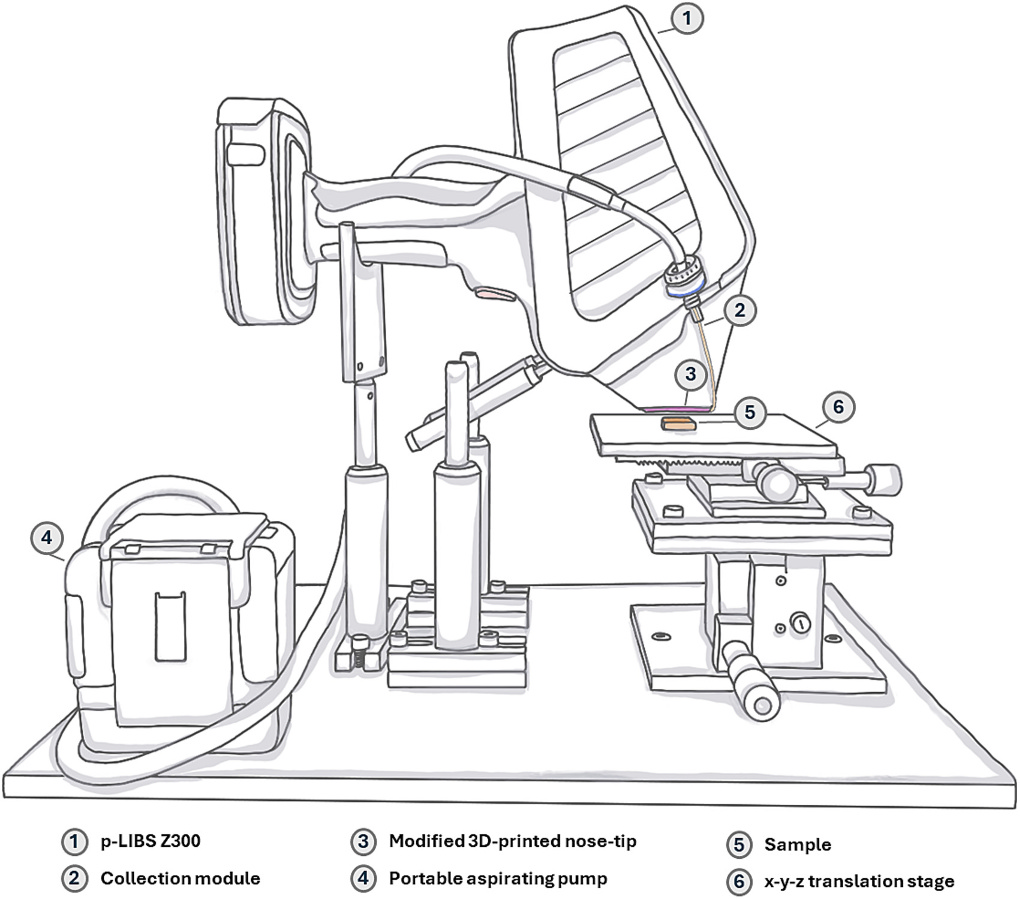
In this study, we modified a portable Laser Induced Breakdown Spectrometer (LIBS) to incorporate an induced particle collection module. Additionally, we developed an ablation strategy to remove approximately 1mg of material from calcium carbonate samples, including limestone slab, speleothems, and corals, producing square-based pyramidal ablation craters with maximal dimensions of about 900 x 900 x 700 μm (length x width x depth). Evaluation of the efficiency of the collection modules revealed a high recovery rate of nearly 80% of the total ablated mass. This sampling protocol was additionally applied to two known samples for which U/Th ages were determined after MC-ICP-MS analyses. Calculated U/Th ages were in good agreement with their expected values, suggesting that the proposed sampling methodology could offer a novel mean for micro-invasive investigations in carbonate caves and shelters.
Reference: Boccas M., Maréchal J., Ronzani A.L., Claverie F., Pons-Branchu E., Maguregui M. Pécheyran C. (2025). Development of a novel field micro-sampling technique using a tandem p-LIBS – particle recovery module: Application to calcium carbonate samples for 230Th/238U dating. Spectrochimica Acta Part B : Atomic Spectroscopy, 231, 107239