
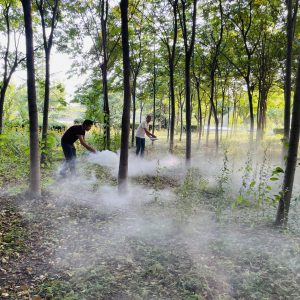
Enhanced rock weathering (ERW) — the acceleration of natural silicate mineral weathering by applying crushed rock to cropland soils — is increasingly recognized as a promising strategy for removing atmospheric CO₂. By binding carbon chemically while improving soil fertility and supporting plant growth, ERW could offer dual benefits for climate mitigation and ecosystem productivity. However, it can also lead to unwanted side-effects which leave the soils feeding us altered for decades and longer.
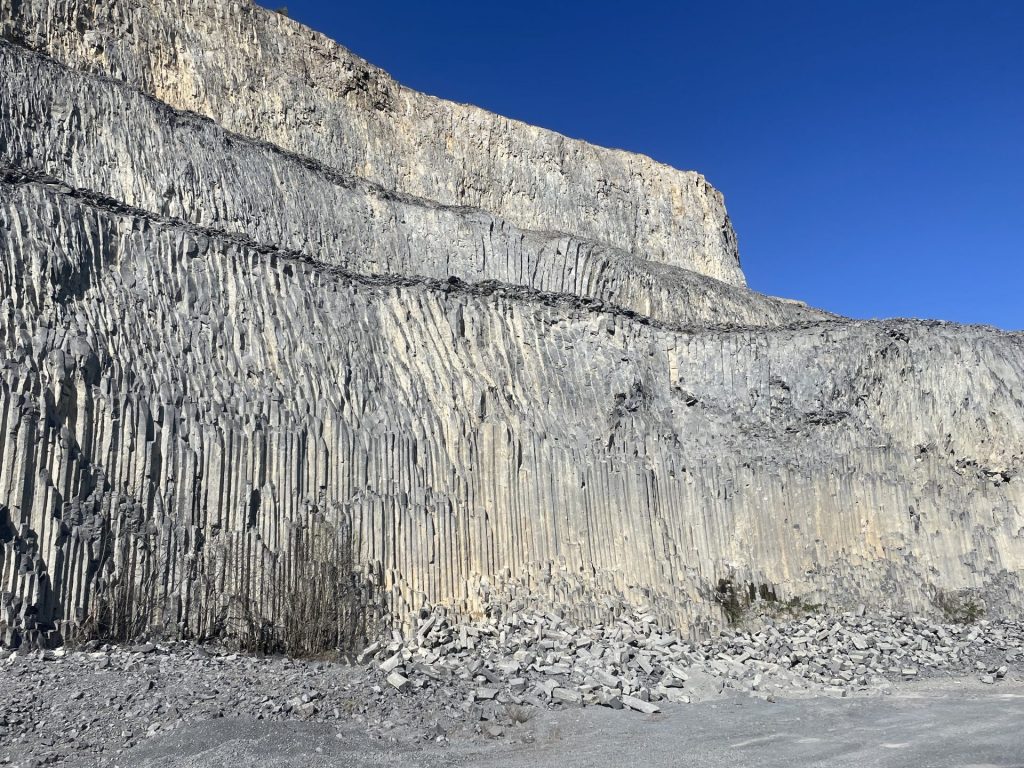
Global modelling suggests large organic carbon response
A 2021 Nature Geoscience study led by Daniel Goll (LSCE) used global ecosystem models to evaluate the CO₂ removal potential of soil amendment with crushed basalt rocks. The analysis suggested that ERW could deliver CO₂ removal beyond the intended carbonate formation from silicate weathering. The model shows that additional CO₂ was removed due to the positive effect of basalt rock on soil fertility which stimulated plant growth and ecosystem CO₂ uptake and storage. This works demonstrated for the first time the need to consider both organic and inorganic carbon responses when assessing CO₂ removal by ERW.
A follow-up study in Nature Communications in 2025 led by Yann Gaucher (LSCE) demonstrated that these side-effects of ERW have far reaching implications for climate change mitigation. Using an integrated carbon cycle, climate and energy system model, the study found that ERW can reduce the costs of achieving the Paris Agreement targets as well as the reliance on other less sustainable carbon dioxide removal technologies. The study also showed that the application of basalt to forests could triple the level of carbon sequestration induced by ERW compared to the classical application restricted to croplands (Figure 1). The modelling at the LSCE positioned ERW as a scalable negative emissions option, while highlighting the need for empirical validation under real-world conditions – in particular for soil carbon responses and application in forests which has been previously overlooked.
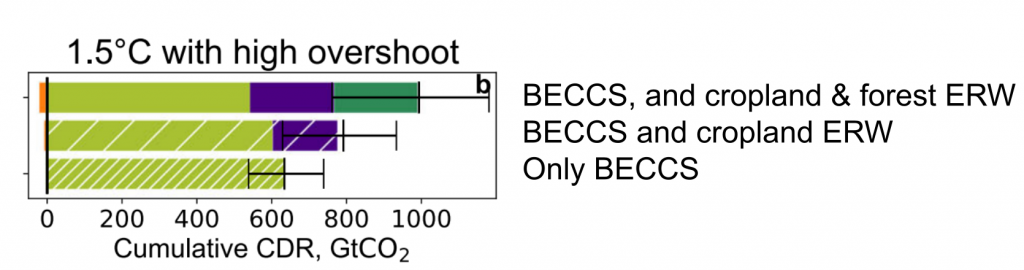
Figure 1: Cumulative carbon dioxide removal (CDR) till the end of the 21st century in scenarios where surface warming was limited to 1.5 C warming (with a temporary overshoot of temperatures beyond that warming target). Shown are scenarios with varying mix of carbon dioxide removal technologies: only Bio-energy with Carbon Capture and Storage (BECCS), BECCS & Enhanced Rock weathering (ERW) on cropland, BECCS & ERW on cropland and on forests.
Field trials provide support for model predictions
By spreading rock powder in real forests researchers are putting the model predictions to the test. First studies are emerging which provide support for the model prediction of large organic carbon responses. In a 20-year-old larch plantation in Northeastern China, rock powder was applied at two rates (5 and 10 t ha⁻¹) affecting CO₂ emissions, stimulated root activity and enhanced tree growth. The new study published in Forest Ecology and Management estimated the net carbon sequestration due to ERW of 2.4 – 6.3 t ha⁻¹ yr⁻¹ with the majority due organic carbon accumulation, confirming the magnitude of organic carbon storage simulated earlier and providing direct support that organic carbon response can outweigh the intended inorganic carbon response.
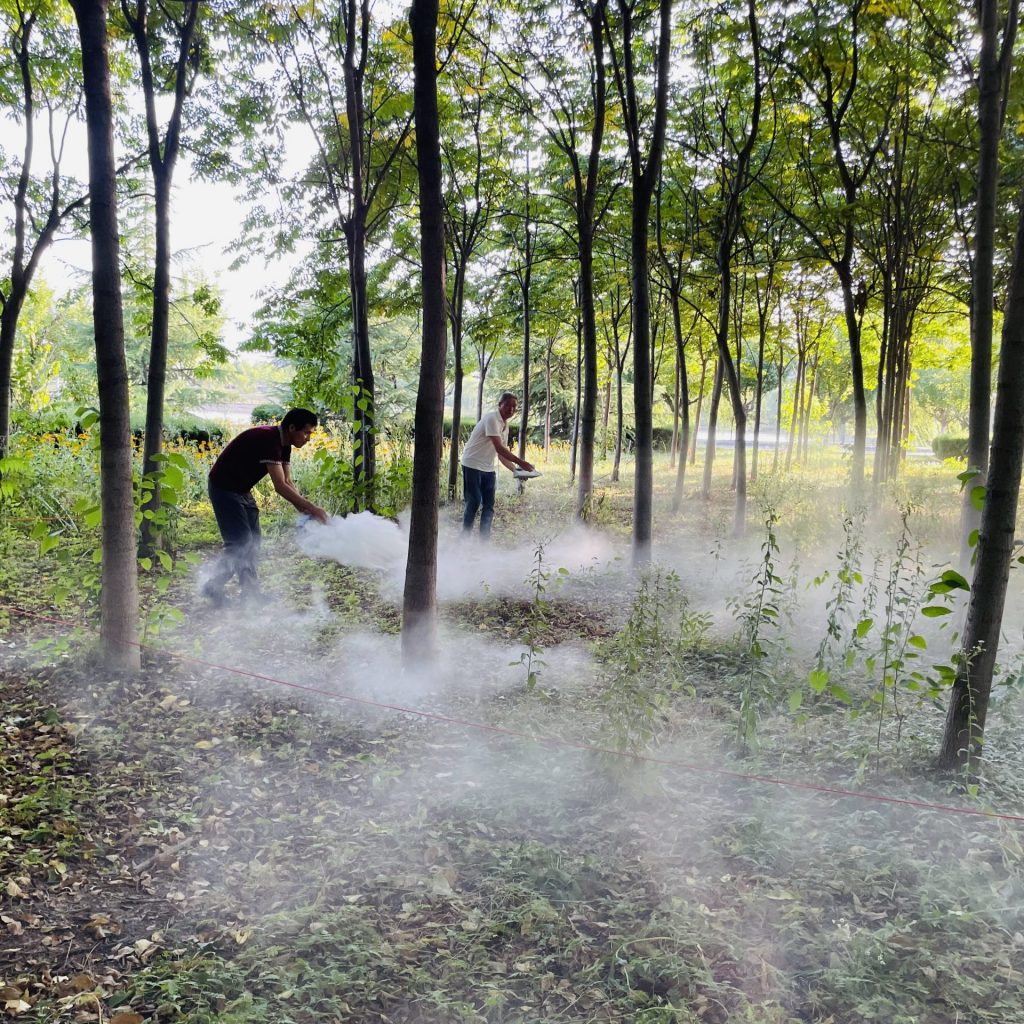
Complementary works (here, here, here & here) in a tropical rubber plantation on acidic soils demonstrate how ERW influences many aspects of ecosystem functioning beyond organic carbon, including nutrient dynamics, ecosystem multi-functionality, microbial functioning and soil organic carbon stabilisation. Over two years, wollastonite rock addition increased soil pH, improved soil phosphorus availability and microbial carbon-use efficiency, while stimulating enzymes involved in phosphorus solubilization and mineralization. ERW also altered plant root strategies and microbial composition, shifting resource acquisition toward greater reliance on mycorrhizal associations and root exudates, and accumulation of soil organic carbon stabilised by mineral associations. These changes improved ecosystem multi-functionality including soil fertility, plant health, and soil organic carbon storage demonstrating that ERW has profound impacts on the functioning of this forest.
Together, these studies provide experimental confirmation that ERW can benefit both carbon sequestration and ecosystem function across diverse forest types.
Global Synthesis shows responses vary widely
A global meta-analysis of 74 publications published in Global Change Biology synthesized results across various climates and ecosystems. The study confirmed that there are substantial organic carbon changes as indirect responses to ERW which can outweigh the intended inorganic carbon response by ERW (Figure 2).
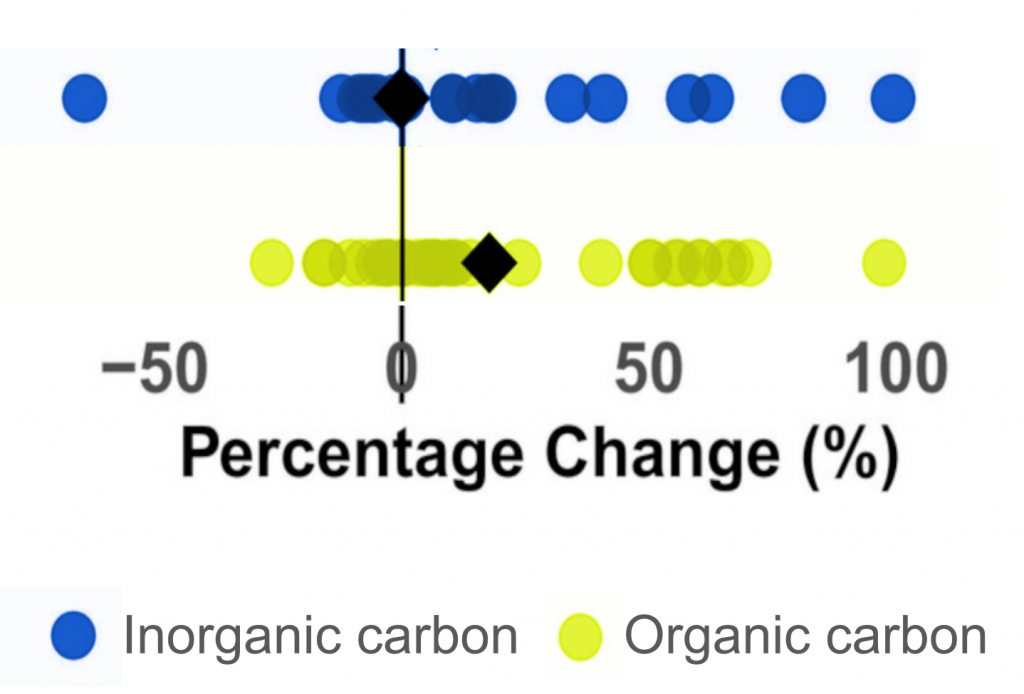
Figure 2: Relative change in intended inorganic carbon response (blue) and indirect response of organic carbon (yellow) in a compilation of 74 ERW experiments.
On average, ERW increased soil organic carbon and its stable fractions by 3–7%, though effects varied by environment and timescale. However, many studies showed minor responses and even soil carbon losses due to ERW. Positive impacts were most pronounced in warm, humid regions and within the first five years of application, while longer-term effects in colder or drier regions were weaker or even negative. The synthesis highlights the global significance of soil organic carbon responses to ERW and also shows that soil carbon losses occur which can offset the carbon dioxide removal by ERW.
Together, these studies trace a progression from model-based theory, to field-scale testing in temperate and tropical forests, to global synthesis. The emerging picture confirms that ERW can deliver meaningful CO₂ removal while improving ecosystem fertility and resilience, but also underscores that outcomes depend on climate, soil conditions, and management practices.
C-ROCK: Soil carbon responses to enhanced weathering
The new project C-ROCK led by the LSCE now addresses the uncertain response of both organic and inorganic carbon. Together with the Eco&Sols (Montpellier, France), Shaanxi Key Laboratory (Xi’an, China), University of Antwerp, and the French start-up ClimeRock, C-ROCK will quantify how both organic and inorganic carbon pools respond to ERW, focusing on the interactions between abiotic weathering processes and biotic ecosystem responses.
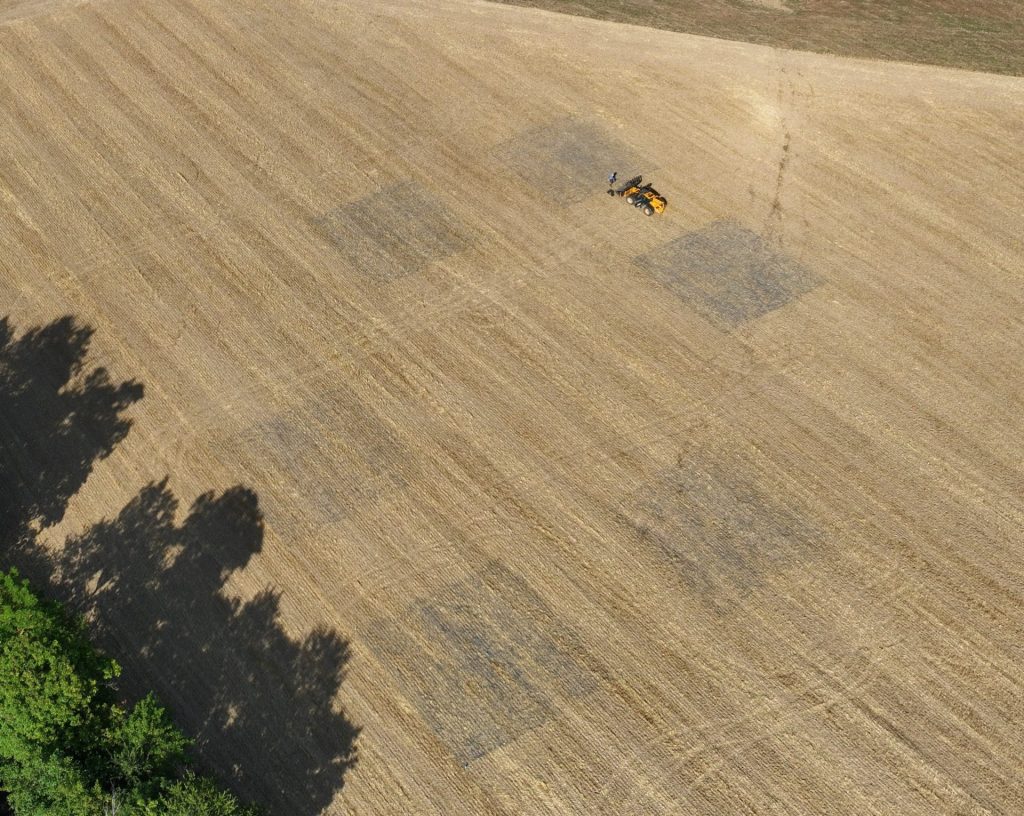
By integrating new and ongoing field trials in croplands and forests across multiple climates, coupled with process-based modeling, C-ROCK aims to resolve when ERW enhances soil carbon sequestration versus when it risks accelerating carbon losses. The project will also co-develop monitoring strategies and modeling tools with stakeholders, ensuring robust and scalable estimates of ERW’s carbon removal potential.
This forward-looking effort aims to provide the critical evidence base needed to guide the responsible scaling of ERW — bridging the gap between promising local experiments, global potential assessments, and real-world application.
Contact: Daniel Goll (LSCE)
References
- Goll, DS., Philippe Ciais, Thorben Amann, Wolfgang Buermann, Jinfeng Chang, Sibel Eker, Jens Hartmann, Katsumasa Tanaka et al. “Potential CO2 removal from enhanced weathering by ecosystem responses to powdered rock.” Nature Geoscience 14, no. 8 (2021): 545-549.
- Bi, Boyuan, Guochen Li, Daniel S. Goll, Luxiang Lin, Hui Chen, Tongtong Xu, Qiong Chen et al. “Enhanced rock weathering increased soil phosphorus availability and altered root phosphorus‐acquisition strategies.” Global Change Biology 30, no. 5 (2024): e17310.
- Gaucher, Yann, Katsumasa Tanaka, Daniel JA Johansson, Daniel S. Goll, and Philippe Ciais. “Leveraging ecosystems responses to enhanced rock weathering in mitigation scenarios.” Nature Communications 16, no. 1 (2025): 3021.
- Xu, Tongtong, Zuoqiang Yuan, Sara Vicca, Daniel S. Goll, Guochen Li, Luxiang Lin, Hui Chen et al. “Enhanced silicate weathering accelerates forest carbon sequestration by stimulating the soil mineral carbon pump.” Global Change Biology 30, no. 8 (2024): e17464.
- Chen, Qiong, Daniel S. Goll, Mardin Abdalqadir, Xinjian He, Guochen Li, Boyuan Bi, Tongtong Xu et al. “Divergent responses of carbon and nitrogen functional genes composition to enhanced rock weathering.” Communications Earth & Environment 6, no. 1 (2025): 645.
- Wang, Xing, Guochen Li, Arshad Ali, Camelia Algora, Manuel Delgado-Baquerizo, Daniel S. Goll, Sara Vicca et al. “Enhanced rock weathering boosts ecosystem multifunctionality via improving microbial networks complexity in a tropical forest plantation.” Journal of Environmental Management 373 (2025): 123477.
- Xu, T., Li, H., Vicca, S., Goll, D. S., Beerling, D. J., Chen, Q., … & Yuan, Z. (2025). Enhanced Rock Weathering Promotes Soil Organic Carbon Accumulation: A Global Meta‐Analysis Based on Experimental Evidence. Global Change Biology, 31(9), e70483.
- Wu, Z., Su, C., Gao, M., Kang, R., Goll, D. S., Yao, M., … & Fang, Y. (2025). Carbon sequestration induced by enhanced silicate rock weathering in a temperate larch plantation in Northeastern China. Forest Ecology and Management, 597, 123135.