

The project
C-ROCK led by the LSCE addresses uncertain response of soil carbon responses to enhanced rock weathering (ERW). Together with the Eco&Sols (Montpellier, France), Shaanxi Key Laboratory (Xi’an, China), University of Antwerp, and the French start-up ClimeRock, C-ROCK will quantify how organic and inorganic carbon pools respond to ERW, focusing on the interactions between abiotic weathering processes and biotic ecosystem responses.
Contact: Daniel Goll
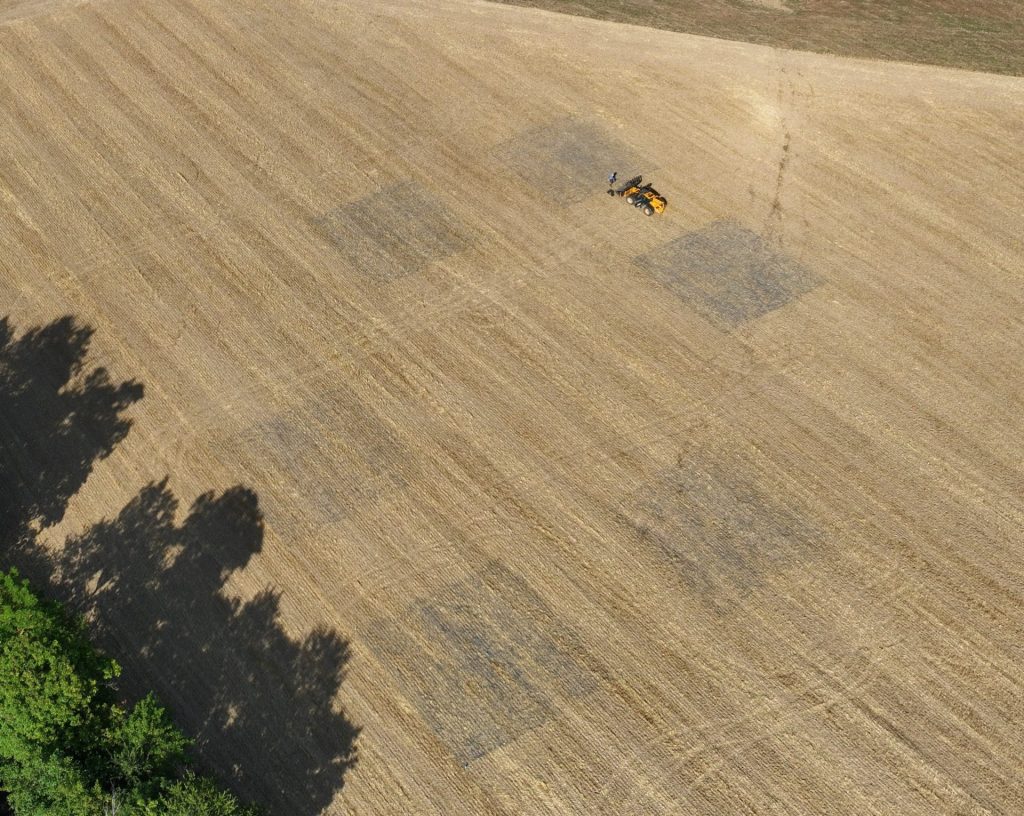
Enhanced Rock Weathering (ERW) presents a promising solution for carbon dioxide removal with co-benefits for other land use targets. Current ERW research focuses on the formation of soil inorganic carbon and application in croplands. This project aims to address knowledge gaps regarding co-benefits for organic sequestration, as well as application in forests, by developing innovative models and data collection strategies to support its implementation in agriculture, forestry, and ecosystem restoration which can render ERW’s carbon dioxide removal potential larger than currently assumed. This multidisciplinary project seeks to bridge critical gaps in understanding soil responses to ERW while ensuring that the findings and software developed are publicly available to support sustainable land use and climate mitigation actions.
- The first objective is to compile existing data on inorganic & organic carbon, and soil respiration from controlled and field experiments, and complement it with new measurements in field trials in cropland and planted forests in France and China to fill identified data gaps.
- The second objective is to create a machine learning emulator of an open-source reactive transport model, which will be integrated with the ORCHIDEE biosphere model. This integration provides means to investigate the interactions between biological and geochemical responses to ERW.
- The third objective is to quantify the soil carbon response to ERW over multi-year timescales under both present and future climatic conditions. Calibrated and benchmarked against compiled observations, the model isolates the contributions of abiotic and biological processes to soil carbon responses to ERW. Stakeholder interactions ensure the practical application of project outcomes. We employ questionnaires to identify stakeholder requirements, disseminate results and tools under an open-source licence, and conduct webinars and workshops to promote the adoption of our findings.