
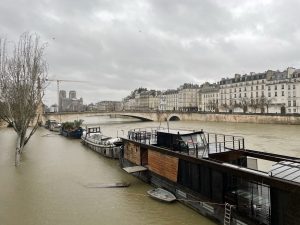
Although the quality of the Seine has been gradually improving since the 1970s, episodes of pollution continue to occur, particularly during floods. Floods can carry and deposit large quantities of contaminated sediment on the banks of the Seine throughout Paris. In addition, the fire at Notre-Dame Cathedral in 2019 also raised again public fears about the impact of this event on lead contamination in the city and its river. To find out what was really going on, we studied the lead contamination in the sediments carried by the Seine, identified the sources of this metal and described the spatial and temporal evolution of its concentrations and sources.
To do this, sediments deposited on the quays during recent floods of the river were sampled at several points along the Seine through Paris. The events targeted were the major flood of 2016 (which occurred before the Notre-Dame fire), the more moderate winter floods of 2020 and 2021 (after the fire) and the spring flood of March 2024, which occurred a few months before the Olympic Games.
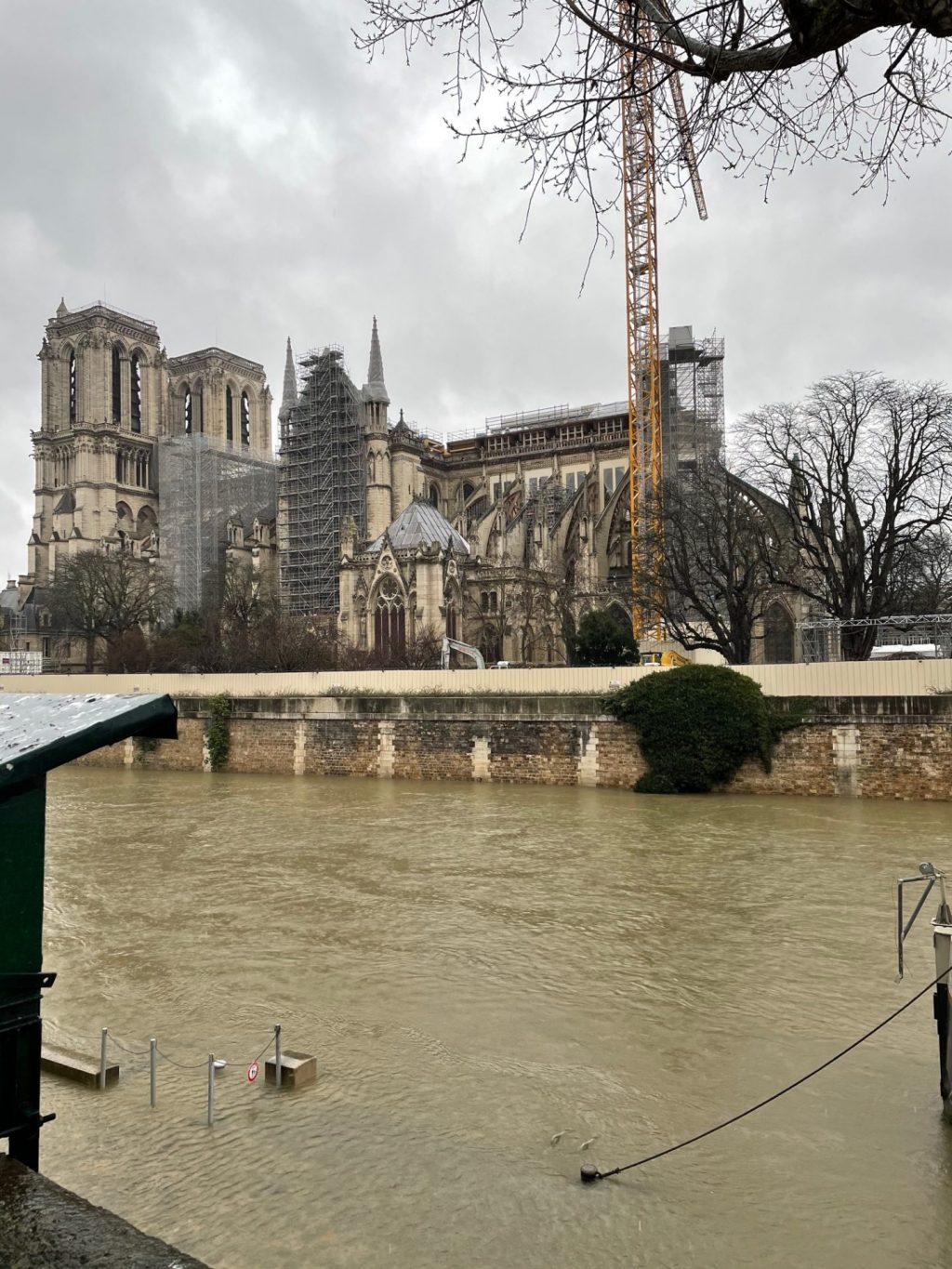
Various physico-chemical properties (radionuclide content, organic matter, metals, etc.) were analysed on the sediments sampled. The results show that the magnitude of the flood has a major impact on the source of the sediments transported and their contamination. For example, during the major flood of 2016, the sediments came mainly from soils in the upper reaches of the Seine basin, which explains why they showed relatively low and very homogeneous levels of metal contamination (including lead). In contrast, the floods of 2020 and 2021 mainly deposited older materials, probably resuspended from the riverbed or eroded from the banks, which explains why the sediments deposited by these floods showed higher and more heterogeneous levels of metal contamination. Among the metals, lead had the highest enrichment factors (which correspond to the ratio between the level of lead measured in the samples and the levels of lead naturally present in the soils of the Seine basin), with values close to 8 around the Ile de la Cité and up to 18 in the sections of the river located further downstream. Particularly high lead concentrations were also observed near Notre-Dame Cathedral. However, the isotopic signatures of lead (which vary according to the source of lead mobilised) suggest that, while some samples taken in 2020 showed a signature similar to that attributed to the dust generated during the Notre-Dame fire, the overall contribution of this event to lead contamination in the sediments of the Seine after the fire seems limited. On the contrary, the lead contamination shows a signature corresponding to the sources of so-called ‘urban’ lead found throughout the city (fountains, pipes, roofs, paints, leaded petrol additives, etc.) and which therefore largely dominate the lead contamination observed throughout the city.
In addition to the metal analyses carried out during the 2016, 2020, 2021 and 2024 floods, other – organic – contaminants such as drugs, medicines, antibiotics and pesticides were also analysed in sediments taken after the March 2024 flood, prior to the Olympic Games. The results show contrasting trends, with an increase in the levels of drugs, medicines and antibiotics in downstream direction along the Seine and, on the contrary, a decrease in pesticide levels along the same transect through the city. Several substances, such as lead, authorised herbicides (diflufenican, pendimethalin) and even banned herbicides (atrazine), were found at levels exceeding the so-called Predicted No Effect Concentrations (PNEC) for aquatic organisms.
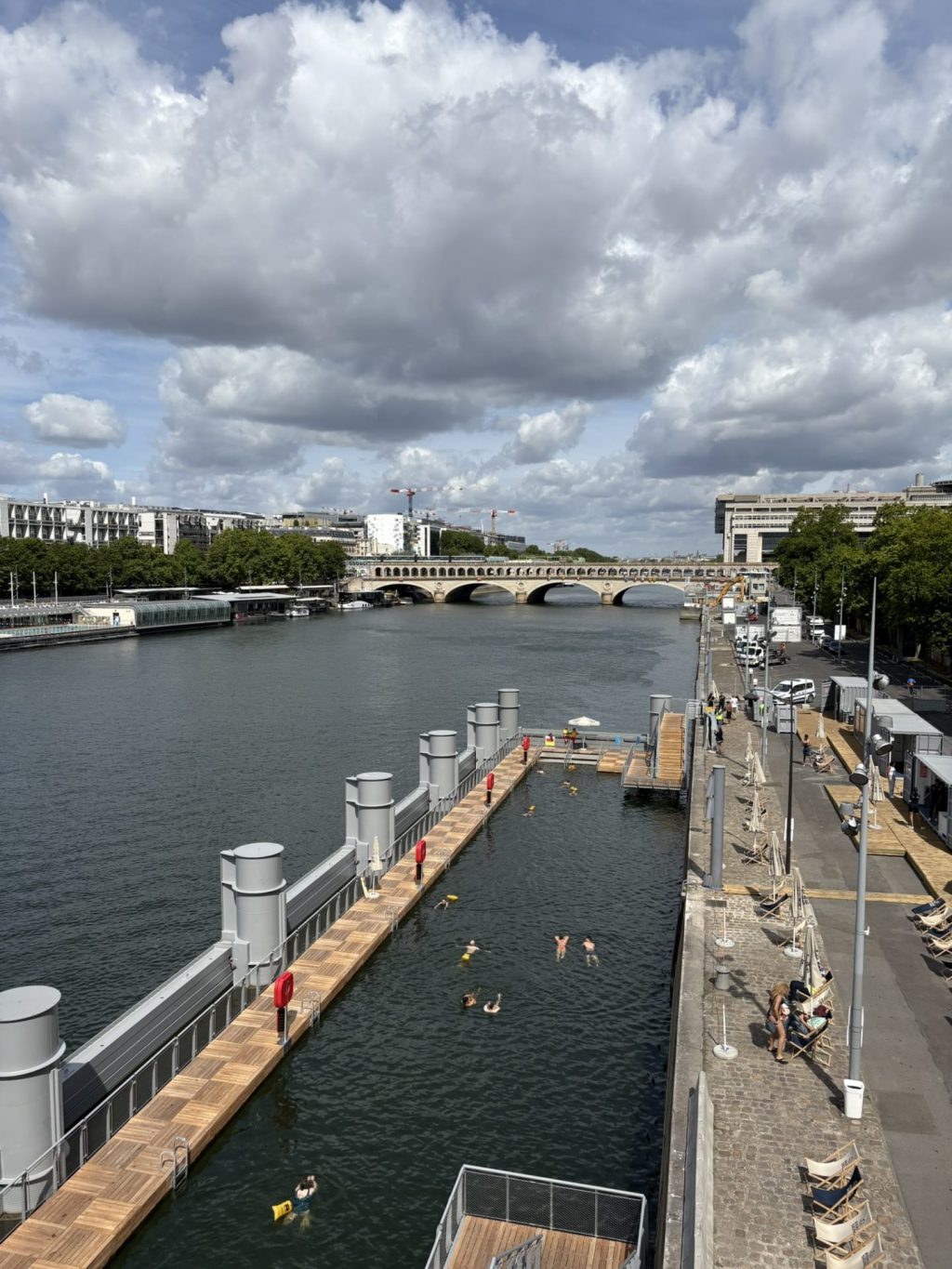
Overall, these two studies show that the quality of the Seine remains fragile and sensitive to events such as flooding. With the reopening of bathing areas in the river in the summer of 2025, our results suggest that a wider range of contaminants (such as metals, pesticides, antibiotics, etc.) should be measured continuously, in addition to the microbiological indicators (Escherichia coli) whose analysis is compulsory under the European regulation on bathing water quality.
References
Evrard, O., Bizeul, R., Xu-Yang, Y., Huon, S., Le Callonnec, L., Foucher, A., Ayrault, S. (2026). Did the 2019 Notre-Dame Cathedral Fire impact the lead contamination of sediment in the Seine River in Paris, France? Journal of Hazardous Materials Advances 21, 101072. https://doi.org/10.1016/j.hazadv.2026.101072
Evrard, O., Xu-Yang, Y., Thiébault, T., Foucher, A., Bizeul, R., Asselin, C., Baudin, F., Thomas, D., Ayrault, S. (2026). Physico-chemical properties and contamination of flood sediment deposits collected along the Seine River in Paris during the March 2024 flood before Paris Olympics. Bulletin of Environmental Contamination and Toxicology 116, 74. https://doi.org/10.1007/s00128-026-04231-0