
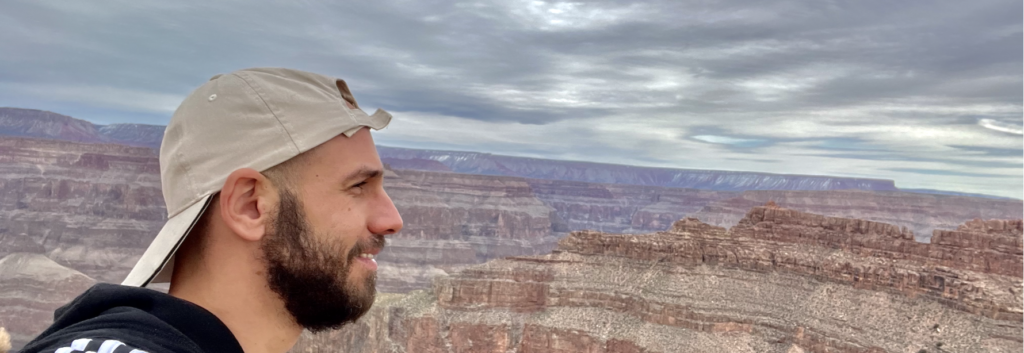
About Me
I’m Research Director in Climate Physics in the Laboratoire de Science du Climat et de l’Environnement (LSCE) of the Institute Pierre Simon Laplace at the French National Center for Scientific Research (CNRS). I’m an expert of weather extreme events such as cold spells, heatwaves, cyclones and severe thunderstorms. My research activity focuses on the attribution of extreme events to climate change, that is understanding how much greenhouse gases influence the occurrence of extremes. At LSCE, I coordinate the group ESTIMR which works at understanding climate extremes from a statistical and dynamical point of view, an essential task in a changing climate! I am also external fellow of the London Mathematical Laboratory, and of the Laboratoire de Météorologie Dynamique de l’École Normale Supérieure in Paris.
My Research
Attribution of Extreme Weather Events to Climate Change
My contributions in this research area focus on understanding the relationship between extreme climate events and the processes that modify their dynamics in the context of climate change. I am particularly interested in cold and snow waves, heatwaves, and extreme convective events. Using techniques based on the concept of atmospheric analogues, we have already analysed a wide range of extreme events worldwide with the methodologies we have developed.
Critical Phenomena in Climate and Complex Systems
Understanding the mechanisms governing transitions between different metastable states in complex systems is a general problem in statistical mechanics. Systems exhibiting critical phenomena range from turbulence and spin glasses to finance, the climate system, and epidemiology. I have contributed to the development of rigorous statistical methods for identifying transition thresholds in experimental data and for modelling systems near bifurcation points through approaches that combine statistics and physics, using stochastic process theory.
Dynamical Systems Methods for the Analysis of Turbulent and Geophysical Flows
Providing a statistical description of turbulence by combining theoretical results with high-quality experimental datasets makes it possible to understand several features of turbulent flows, such as the dissipation anomaly or the existence of singularities in the Navier–Stokes equations. I subsequently transferred these analyses to the field of extreme weather events to diagnose energy transfers. I currently contribute to this research area by developing dynamical statistical techniques based on extreme value theory and the analysis of stochastic processes. These approaches make it possible to quantify the distance between observations and theoretical models within a rich model–parameter space, enabling the description of complex phenomena such as the atmospheric jet stream or geomagnetic storms.
Contact
LSCE, CEA-Saclay Building 714 – Piece 1007 Orme des Merisiers, 91191 Gif-sur-Yvette
+33169088541