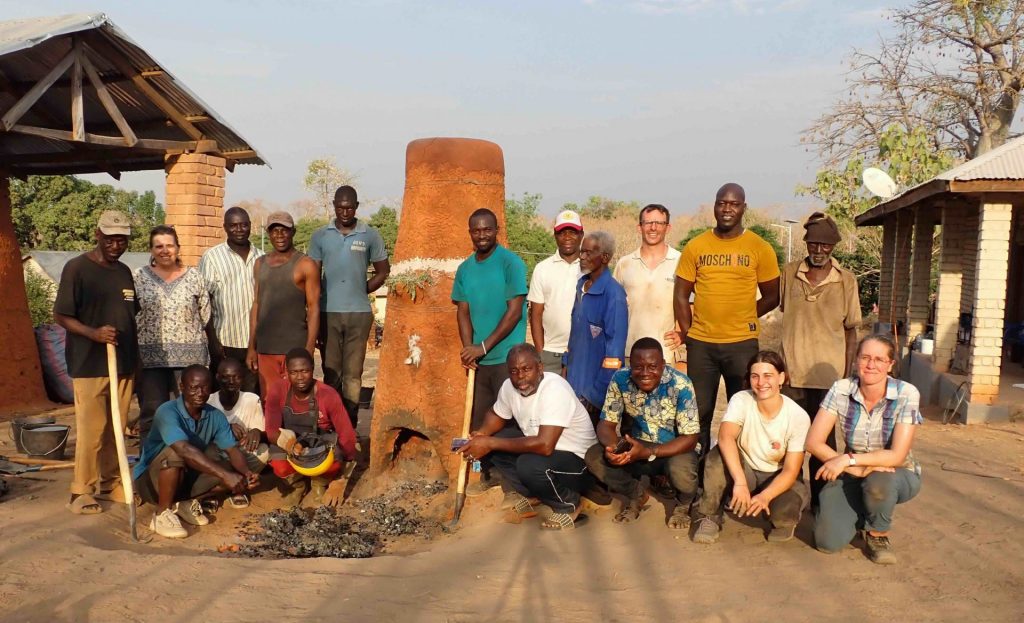

The objective of this experimental archaeology project—the first of its kind in the region in 30 years—was threefold: (1) to document the smelting process from a technical perspective by comparing it with observations made during the excavation of archaeological blast furnaces in 2023 and 2024 (how did metallurgists work?); (2) to better understand the archaeomagnetic dating results obtained by Giorgia Ricci on the archaeological structures (what is the actual effect of the iron mass on the remanent magnetization signal in the walls?); (3) to preserve this lost knowledge, in collaboration with the local community.
The first two weeks of the mission were devoted to preparing the smelting process: gathering raw materials (clay, sand, etc.), making charcoal, crushing the ore (hematite), and building and drying the furnace. The furnace has dimensions similar to those of 17th–19th-century archaeological structures (1 m in external diameter at the base and 2.15 m in height) (Fig. 1).
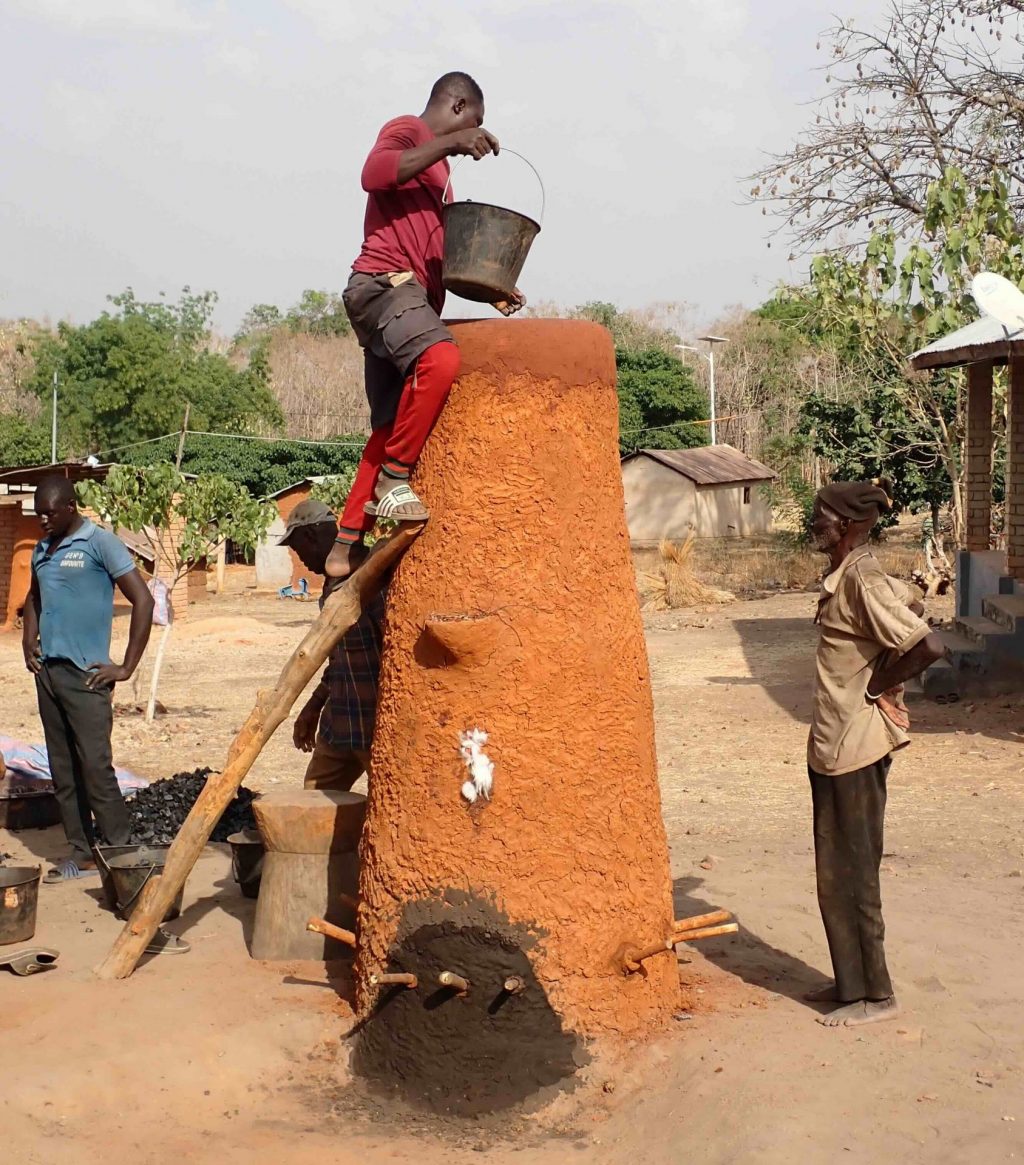
Although we lack precise information from our predecessors regarding the operational procedures, the challenge was all the more ambitious given that these low-temperature furnaces operate by natural ventilation. Our reduction process lasted about a day, with continuous temperature recordings taken at several points within the furnace. The magnetic field vector was also measured repeatedly around the furnace using the device designed by Elodie Brugère.
The walls of the low furnace withstood temperatures up to approximately 1400°C. The result of the reduction appeared disappointing on the very same day: we obtained “only” a large slag because the iron could not be separated from the slag (the door was too thick to be pierced and allow the slag to flow out) (Fig. 2). Closer examination of the large slag’s composition revealed the presence of iron, which was later confirmed in the laboratory.
In the following days, the low furnace was cut along one-fifth of its circumference to take archaeomagnetic samples at different heights as part of methodological tests. For the entire team’s (local and French) first reduction experiment on this type of low furnace, the mission was a great success.