

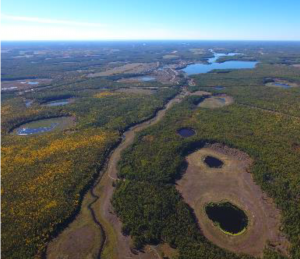
This publication is dedicated to the memory of Christophe Grenier, who initiated the Syrdakh Observatory
Why it is important ?
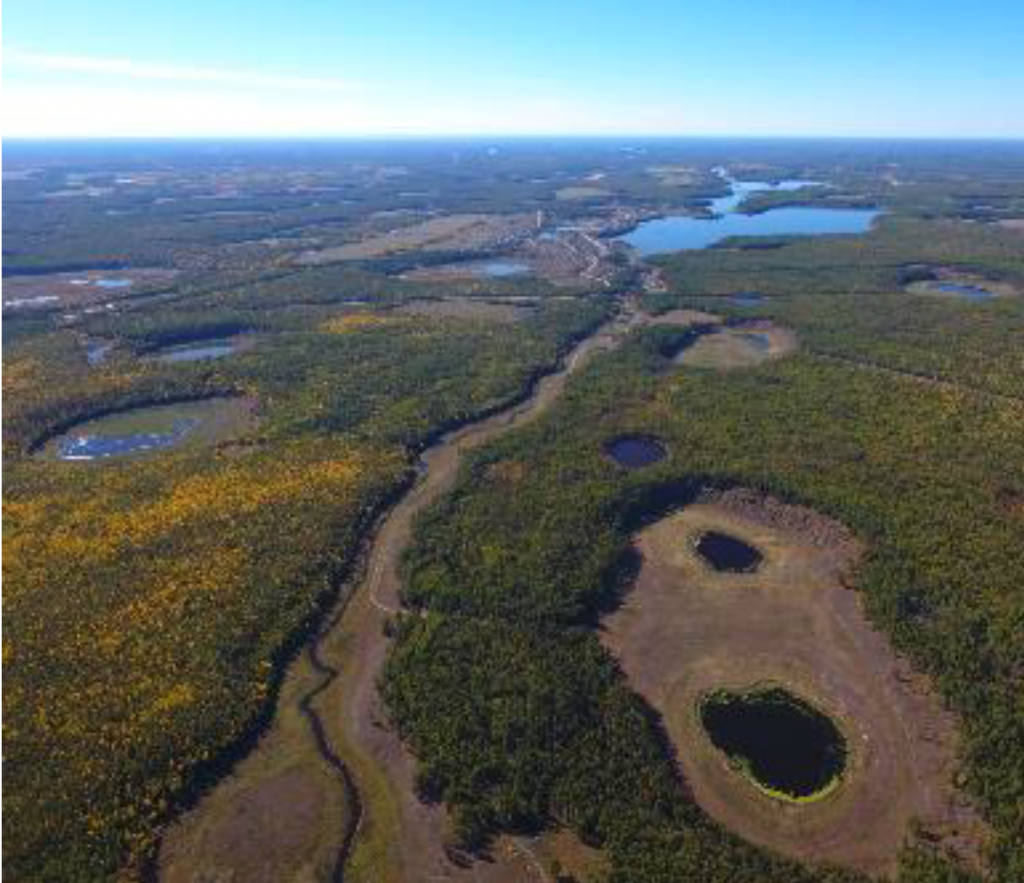
Permafrost thaw is altering the transfer of water, heat and carbon across Arctic landscapes, yet long-term field observations remain scarce. This database brings together ten years of environmental measurements from a unique observatory in Central Yakutia. These observations provide new insights into heat exchanges between the atmosphere, surface waters and permafrost, improving the representation of these processes in permafrost and climate models.
A tribute
This publication is dedicated to the memory of Christophe Grenier, a modeller who believed that understanding environmental processes begins with field observations before they can be represented in numerical models. He initiated the Syrdakh Observatory and the field campaigns that produced the ten-year dataset presented here, but passed away before seeing these observations published.
Our contribution
Coordinated by Eric Pohl, former postdoctoral researcher of Christophe Grenier, this publication makes the complete 2012–2022 observational dataset openly available. We contributed to this database through radiocarbon (14C) measurements of soils, permafrost and vegetation, providing essential information on carbon age and dynamics.
At a glance
🧊 10 years of observations (2012–2022)
🌡️ 3 interconnected compartments monitored: atmosphere, water and soils
📍 1 Yedoma permafrost river valley observatory
💾 1 open-access database including processing scripts and GIS data
Reference: Pohl E., Grenier C.,[…], Ottlé C., Hatté C., […], Mouche E. (2026) Thermo-hydrological observatory in a permafrost river valley landscape in Syrdakh, Central Yakutia. Earth System Science Data, 18, 3525–3557, doi: 10.5194/essd-18-3525-2026, 2026.