
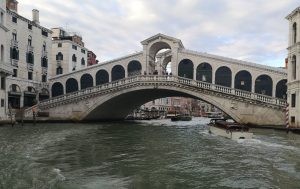
The marine heatwaves of 2026 caused a massive die-off of mussels in the Venice Lagoon, a phenomenon studied by the LSCE and the University of Venice.
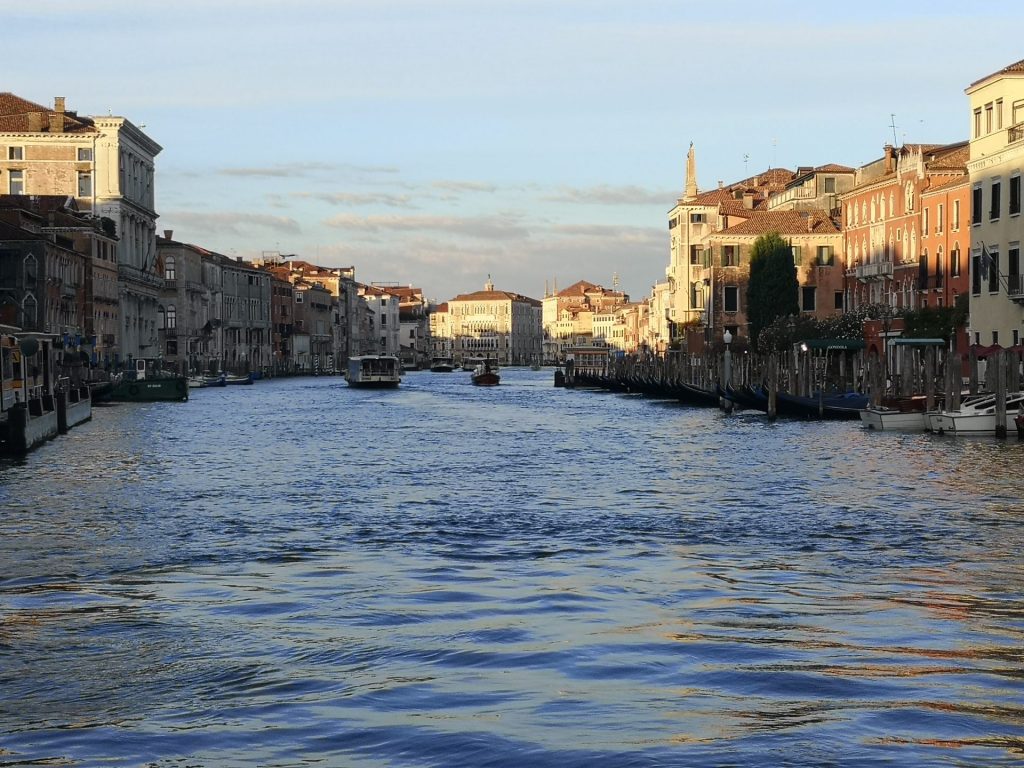
The summer of 2026 was marked by heat waves of exceptional intensity; these heat waves also affected the oceans, with marine heat waves observed in various seas. This was the case in the Adriatic Sea, where the Venice region and its lagoon ecosystem were particularly affected. Under the influence of anthropogenic global warming, the Mediterranean basin recorded particularly high temperature anomalies during the summer months.
Due to its shallow depth and hydrodynamic characteristics, the Venice Lagoon is highly vulnerable to episodes of extreme warming. Persistently abnormally high temperatures, reaching 32 °C locally within a few hours, contributed to the creation of hypoxic conditions, which, combined with the effects of heat stress, led to massive mortality among farmed mussel populations. Shellfish farmers observed, in particular, open shells and the complete degradation of soft tissues, attesting to the extent of the biological losses. The economic consequences were considerable, with several hundred metric tons of production destroyed and financial losses reaching tens or even hundreds of thousands of euros per farm.
At the same time, these thermal conditions have promoted the microbial degradation of algae, which may contribute to the depletion of dissolved oxygen in the sediments and bottom waters, exacerbating ecological pressures on benthic communities and threatening, in particular, the clam (vongole) populations in the Goro area.
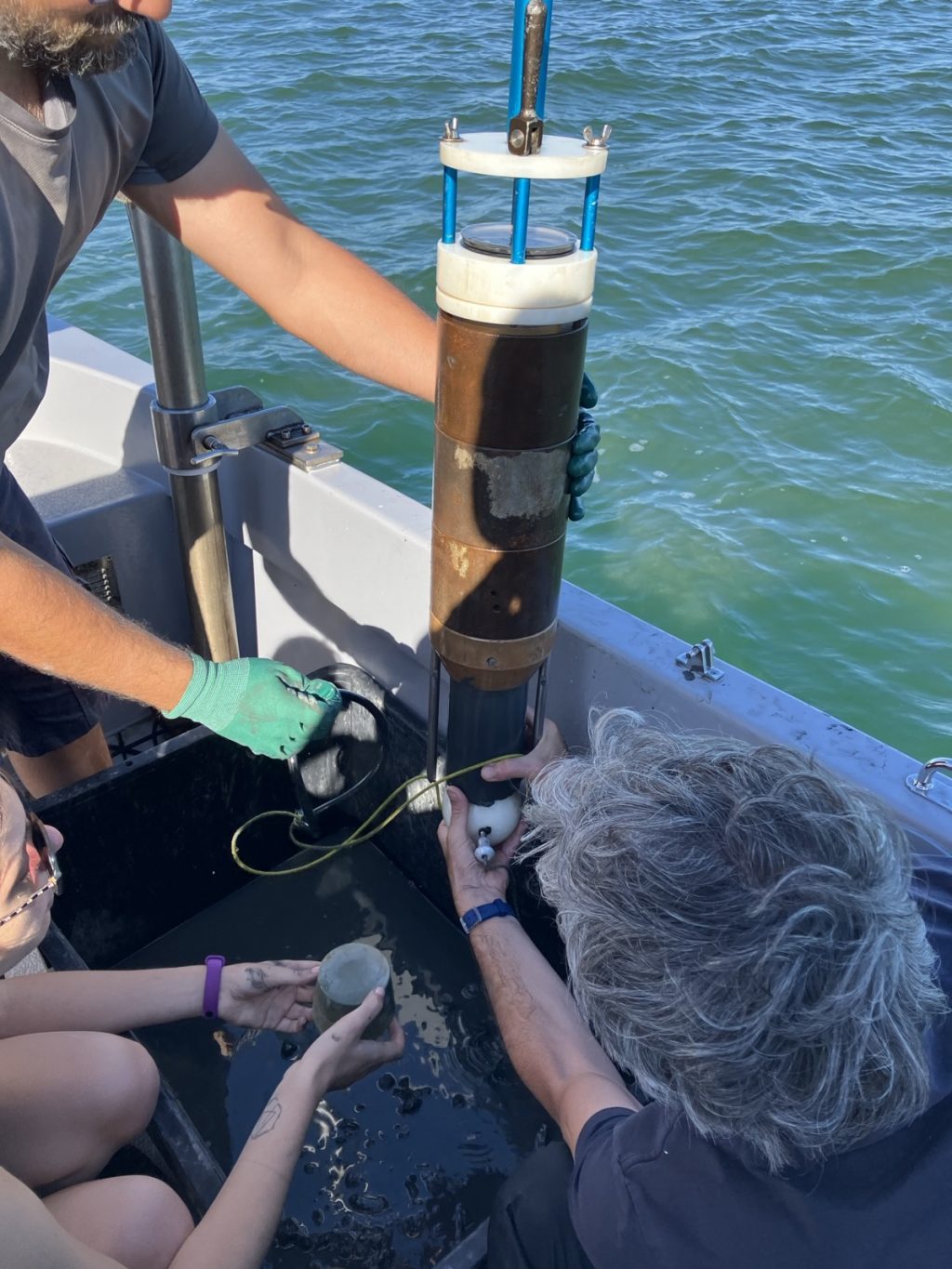
It was in this context that the University of Venice called upon the expertise of the LSCE’s OCEANIS team as part of a modeling study of the Venetian Lagoon conducted by Ph.D. candidate M. Mazzotta and her thesis advisor, Daniele Brigolin. In September 2026, we conducted core sampling at two shellfish farming sites to extract interstitial fluids, to conduct incubations, and to measure oxygen and pH microprofiles at the water-sediment interface in order to study the response of carbon and nitrogen fluxes in low-trophic-level aquaculture systems subjected to extreme events by combining field observations and modeling.
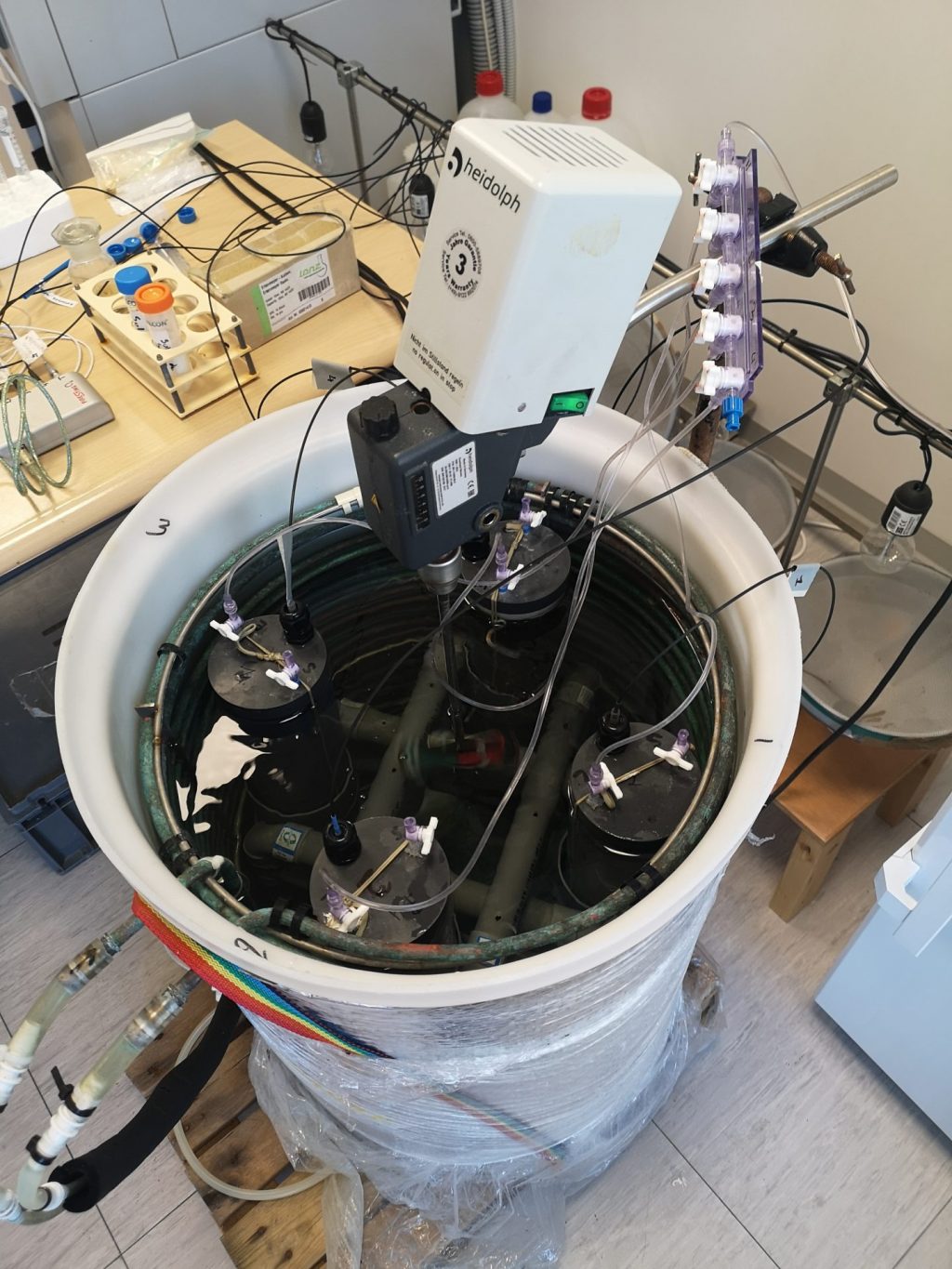
This study, conducted jointly by the IUAV University of Venice, Ca’ Foscari University of Venice, and the LSCE, contributes to two research areas:
- The first area focuses on “aquaculture activities and the regulation of ecosystem services in the Venice Lagoon.”
- The second area, which forms the basis of Monica Mazzotta’s doctoral dissertation, focuses on “Development and application of ecological models for land-use planning in marine aquaculture: interaction with nature conservation objectives and adaptation to climate change.”