Participants : Amaëlle Landais, Frédéric Prié, Carlos Pallares, Antoine Rabatel, Antoine Séjourné
This project aims to develop an innovative system for collecting and transporting water and air samples from glaciers without the need for a cold chain, in order to document their age and geochemical composition with streamlined logistics. Glaciers, which serve as natural reservoirs for 70% of the world’s freshwater, play a key role in the study of climate variations. However, dating them—particularly in the absence of organic material—remains complex. One method, developed at the LSCE, involves analyzing the isotopic composition of oxygen in the air trapped within the ice. However, this traditionally requires transporting the ice in solid form to the laboratory. To overcome the logistical challenges in tropical glacier applications, a laboratory device was designed to isolate and preserve air from ice bubbles at room temperature; this device was validated by initial tests in 2024–2025.
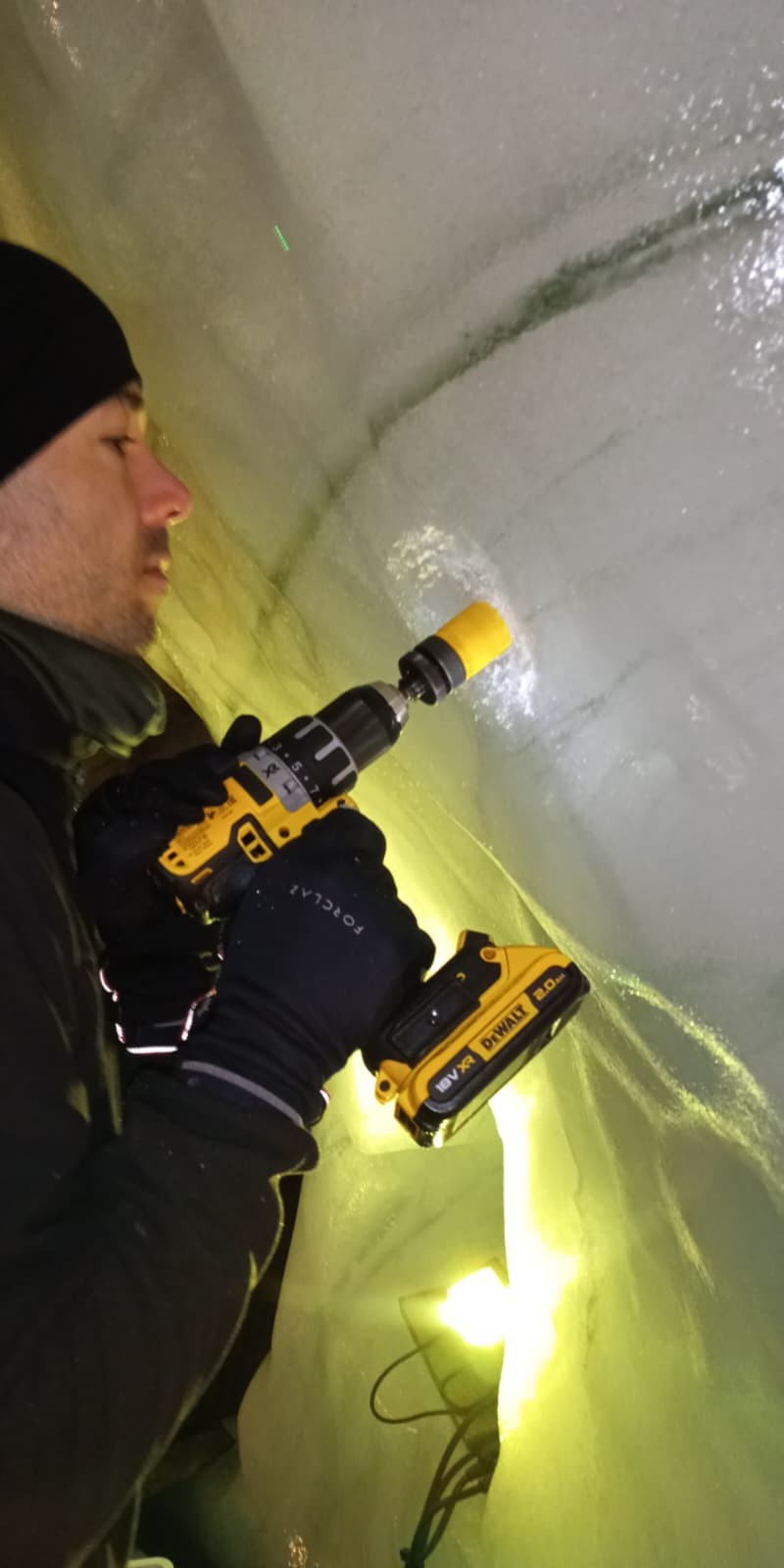
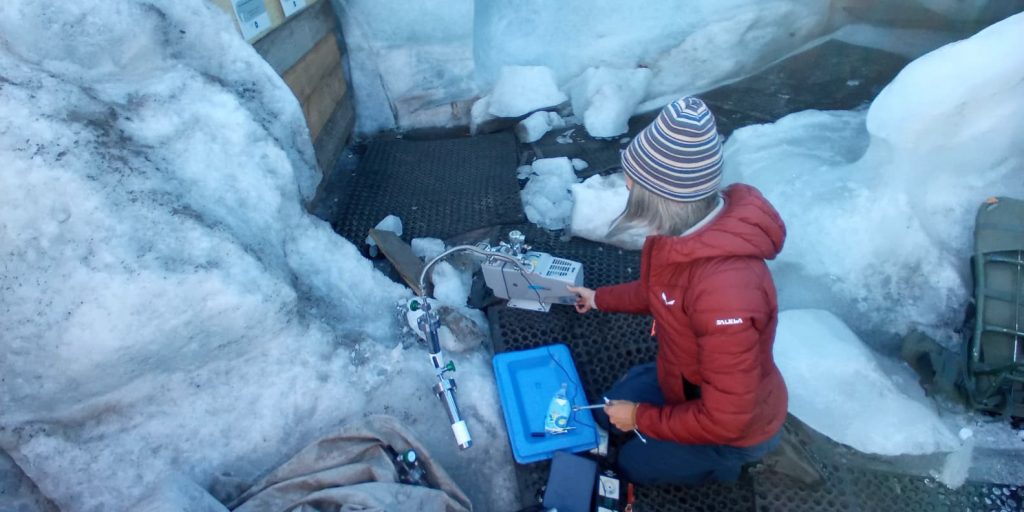
The key milestones of this project were successfully completed: fabrication of a lightweight field prototype (March–June 2026), laboratory testing under temperature conditions equivalent to those expected in the field (July–August 2026), and testing of the field prototype in the Alps on the Girose Glacier in September 2026 (see photos). A team of four people (LSCE, GEOPS, IGE) successfully collected samples, which are currently being analyzed at the LSCE. This system will subsequently be deployed on the Overo volcano glacier in Argentina, where samples of ice and volcanic ash (dated between 50 and 200 ka) await in-depth analysis. The results will help to more accurately determine the age of the glaciers and their role in the regional hydrological cycle, while opening up opportunities for future collaborations on temperate or tropical glaciers.