

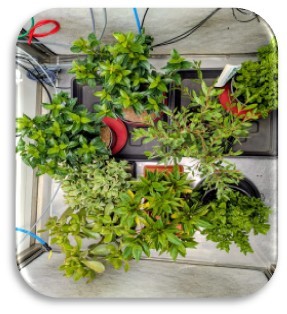
Biological activity is key to control the CO2 atmospheric concentration and strong retroactions involve climate, carbon cycle and biosphere productivity. Still, determining the contribution of the biological The BIOPROXY project aims to estimate the past productivity of the biosphere based on the isotopic composition of oxygen and carbon dioxide.fluxes on the CO2 atmospheric concentration over the Quaternary remains difficult. The isotopic composition of CO2 is a useful tool but disentangling the different drivers of d13C of CO2 is still a challenge : some studies suggested that the changes in d13C of CO2 and CO2 during the last deglaciation should be explained by increase in sea surface temperature and weakened biological pump, other studies invoked upwelling of carbon-enriched waters in the Southern Ocean, growth of the terrestrial biosphere or the role of thawing permafrost. In parallel, the elemental and isotopic composition of O2 has also been proposed as a tool to provide information on total biospheric productivity or relative proportion of terrestrial vs marine biological productivity. Here, we want to combine the information carried by both tracers to better constrain the evolution of the biological carbon and oxygen cycles with respect to climate change. To reach this goal, we aim at (1) identifying the elemental and isotopic signature of CO2 and O2 changes during biological processes, (2) complete a 1.5 Myear record of emental and isotopic composition of O2 and CO2 using the newly recovered Beyond EPICA ice core and (3) interpret the ice core series using a simple box model equiped with CO2 and O2 isotopes and adapted for sensitivity tests. The approach followed in this project combines instrumental development (laser spectroscopy), laboratory experiments (controlled and multiplexed biological chambers) using expertises in ecophysiology and isotopic geochemistry, analytical measurements (mass spectrometry and optical spectroscopy), ice core analyses as well as simple modeling including explicit representation of the isotopes in the carbon and oxygen cycles over glacial – interglacial cycles.
Participants : LSCE (PI A. Landais), ECOTRON Sud de France (PI C. Piel), ECOTRON Ile de France (PI S. Fiorini), IGE (PI E. Capron), ENS Géologie (PI S. Abiven)