
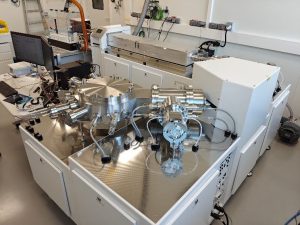
The SAPPHIRE XD from Nu Instruments, the first next-generation MC-ICPMS instrument installed at the LSCE within the GEOTRAC team and as part of the PANOPLY analytical platform.
This instrument, which arrived in early 2026, is the latest addition to the GEODIA project (Geochemistry of Anthropocene Impacts), co-funded by the Île-de-France region, the CEA, the University of Versailles Saint-Quentin, the University of Paris-Saclay, the CNRS, the LSCE and RéGEF.
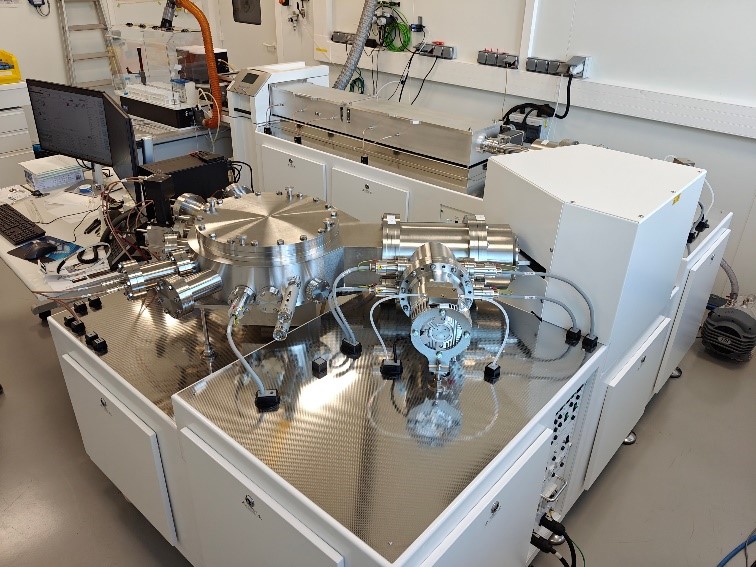
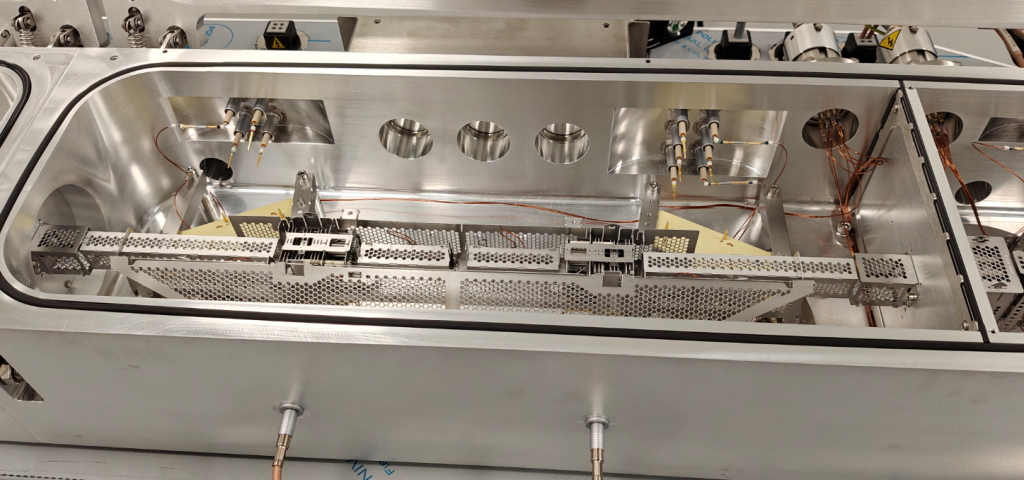
It replaces our ageing Neptune Plus and offers enhanced analytical capabilities, notably with the addition of an MSMS filter, dispersion increased to 25%, 28 Faraday cages coupled with 1011, 1012 or 1013 amplifiers maintained at low temperatures, 4 ion counters (including 3 SEMs and a Daly). We will be able to add a collision/reaction cell at a later date should new developments arise. We will be able to analyse all the standard isotopic systems on our platform (B, Si/Mg, Sr, Nd, Pb, U/Th) and explore new systems thanks to the technological advances of this instrument.
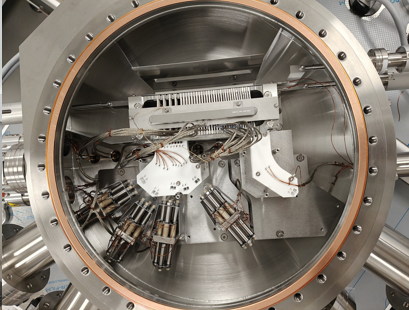
We are very optimistic about the results to come, and although this is the first instrument of its kind to be installed anywhere in the world, we must naturally be more patient, particularly with regard to a few components that still need to be installed later this year. We are working closely with the manufacturer, who has been very responsive, to adapt the software to our needs in particular, and we are confident that we can take a significant step forward with certain isotopic systems. It is currently coupled with the ESI 4DX or µDX ion sources, and the Aridus 3, Apex Omega and Apex Omega HF desolvators.
The first 500 samples were successfully analysed for the Si/Mg, Nd and Sr isotopic systems.
Contacts: Arnaud Dapoigny and Eric Douville