
Living among blacksmiths ? Preliminary archaeological results of the 2023 campaign at the Kpeta 2 settlement (Benin)
Delvoye, A., Robion-Brunner C., N’Dah C., Manger-Merceron C., Hervé G., Delqué-Kolic E. et al. Nyame Akuma, 103, 8-17.
This article presents the results of an excavation campaign conducted at the Kpeta 2 site in Aplahoué, in southern Benin. The CliMag and LMC14 teams from the LSCE are involved in the chronological aspect of this project, which more broadly focuses on the history of iron metallurgy and its artisans over the past millennium.
Archaeological surveys conducted around Aplahoué since 2021 have identified numerous sites associated with iron metallurgy (mines, smelting sites), as well as a few settlement sites, offering a rare opportunity in the Gulf of Guinea region to document both metal production and the populations that produced and consumed iron during medieval and modern times.
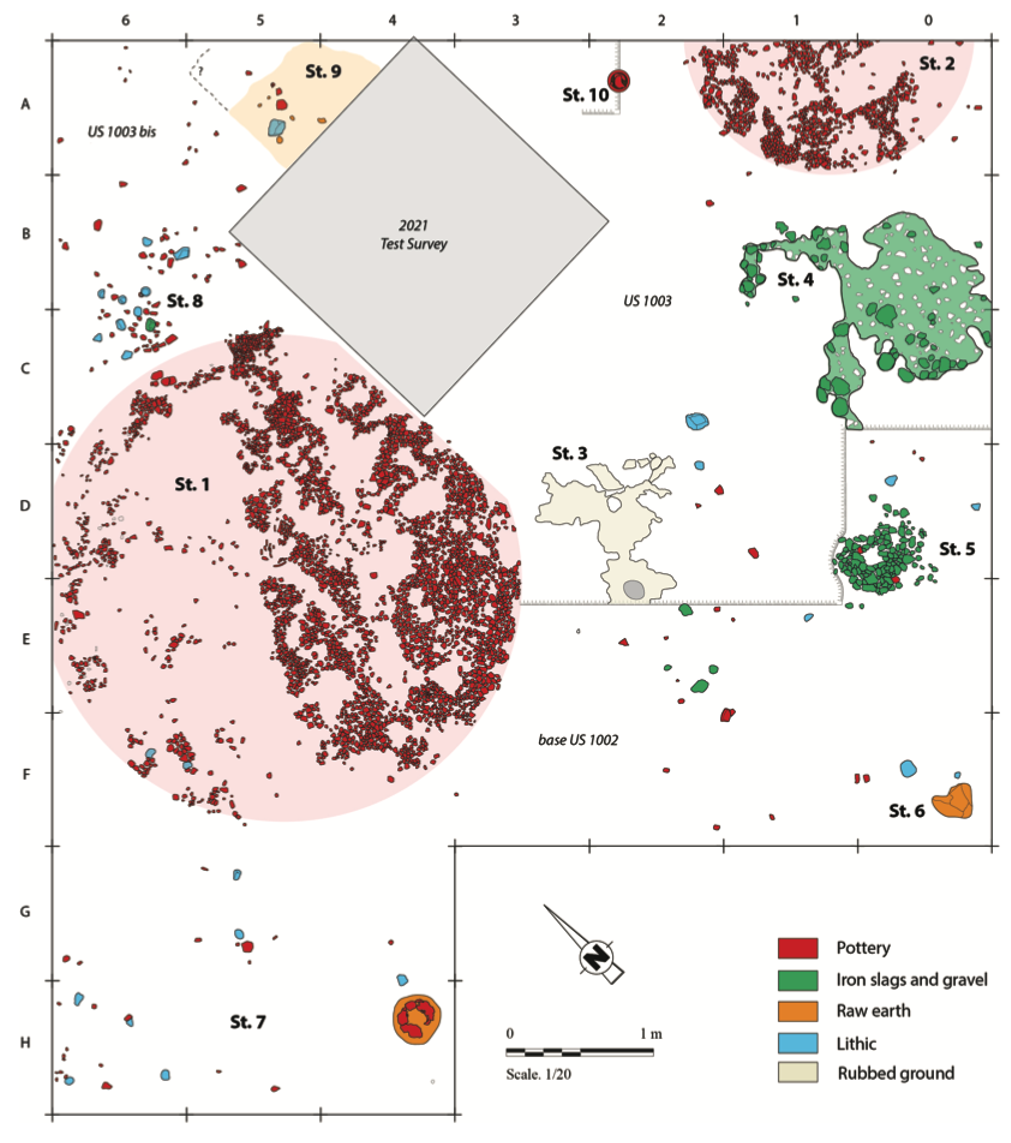
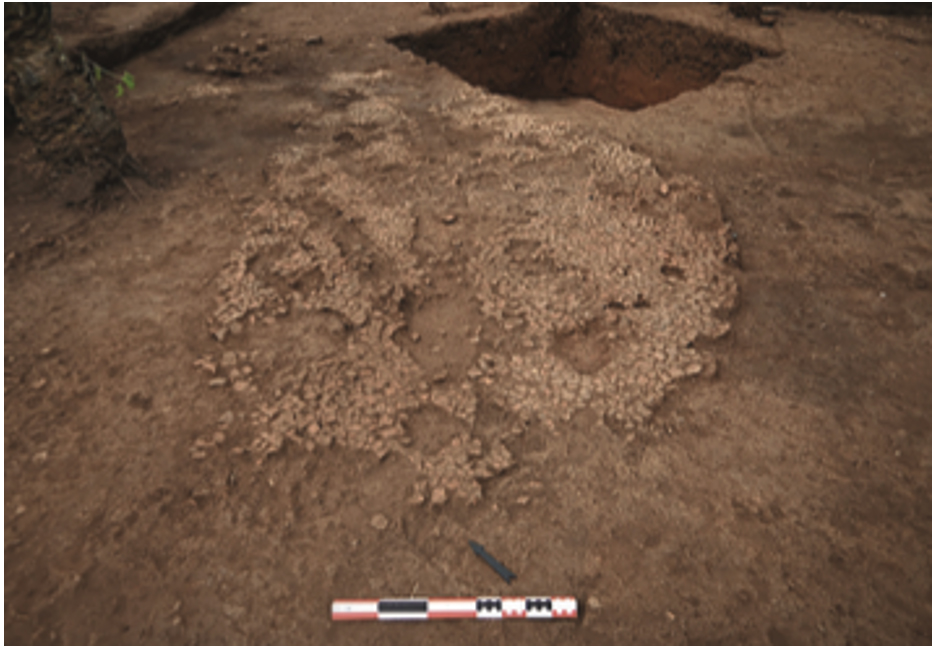
The extensive excavation of the Kpeta 2 settlement has revealed, among other things, several paved surfaces. Common in Benin and Nigeria, these indoor and outdoor floors are constructed here of ceramic shards laid flat or on their sides (Fig. 1). These layers have been radiocarbon dated to the 14th and 15th centuries (five dates obtained at LMC14) . The spatial proximity (200 m) and the contemporaneity of the 14C dates with the slag heap at Kpeta 1 suggest that the Kpeta 2 settlement may have been occupied by former blacksmiths. The ubiquity of iron slag, some of which was used in architectural structures, would be another indication supporting this interpretation.