As part of the AWACA project, developments were carried out to strengthen the supervision and energy forecasting capabilities of the autonomous stations deployed in Antarctica. These systems must operate in an extreme environment, with limited energy resources and very few possibilities for on-site intervention. The work focused both on improving embedded control tools and on exploiting meteorological data to anticipate renewable energy production.
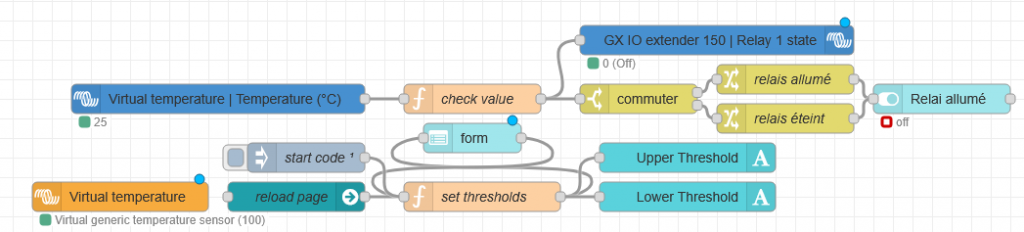
A first contribution consisted in upgrading the Node-RED program deployed on the Cerbo GX, which is used to control and supervise the energy system. In particular, a hysteresis logic was added to the heating control in order to avoid repeated switching around the temperature setpoint. At the same time, data from the weather station were collected and injected into the VRM portal through virtual instruments, making it easier to monitor local conditions and equipment operation.
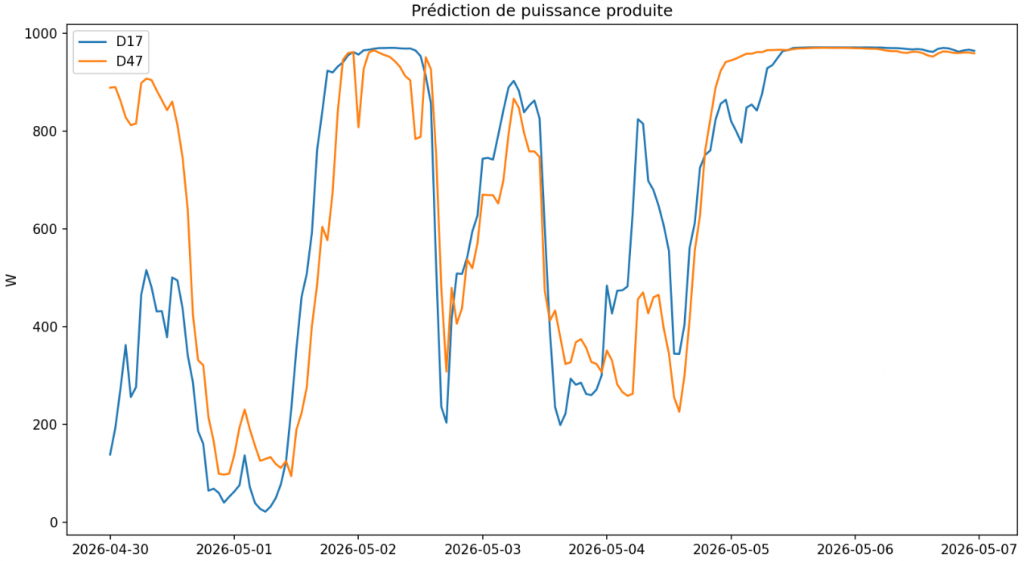
A second contribution focused on developing Python scripts to compare wind forecasts from the ECMWF model with real observations from the AWACA stations, and then to relate wind speed to the power produced by the wind turbines. This work made it possible to establish an empirical relationship between wind and power production, and to use weather forecasts to estimate in advance the energy likely to be produced. These developments represent a useful step toward better energy management of AWACA stations and greater robustness of field observations in Antarctica.