
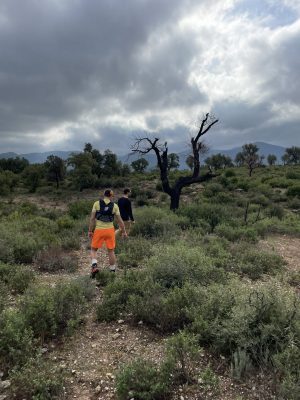
The Var department is one of the areas in France that are the most affected by forest fires. However, the long-term trajectories of post-fire erosion and ecosystem recovery remain poorly understood, particularly at the watershed scale—the unit that concentrates runoff across the landscape. The LSCE has just published a study conducted on three micro-watersheds draining into reservoirs in the “Peguières” area of the Estérel massif; these sites were entirely affected by fires in either 1987 or 2003 (a historic year in France, with 61,424 hectares burned, according to the French Forest Fire Database—BDIFF). Their small size (<40 ha), steep topography, and high connectivity between burned slopes and reservoirs facilitate rapid sediment transfer, enabling an accurate documentation of hydro-sedimentary responses to fire. The approach developed in this study relies on the analysis of sedimentary records combined with multi-proxy analyses (geochemical, physical, and grain-size properties). Unlike conventional approaches—which are often limited to short-term observations and lack pre-fire baseline data—this method allowed for the reconstruction of the phases before, during and after the fire spanning nearly five decades, thereby providing an integrated view of sediment flux dynamics and ecosystem resilience.
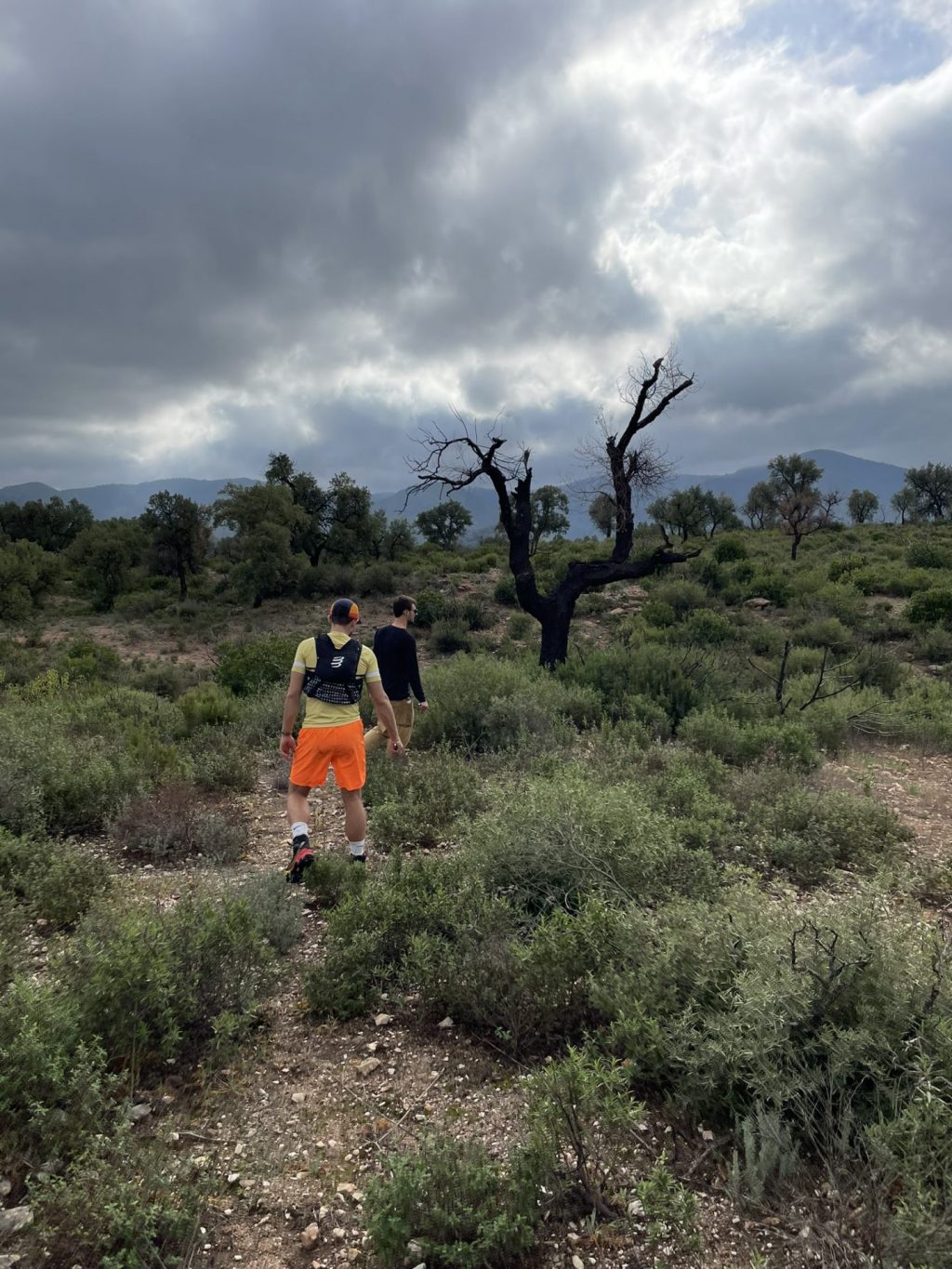
This research has highlighted the pivotal role of forest fires in altering material transfers within Mediterranean watersheds, emphasizing that their effects extend far beyond immediate disturbances (e.g., vegetation destruction). The results show that fires trigger a marked increase in erosion, the intensity of which depends on local watershed characteristics (topography, vegetation cover, soil properties, drainage network connectivity, and post-fire management practices).
This immediate erosional response reveals significant spatial variability across the study sites, despite comparable geological and climatic settings. Over the longer term, resilience trajectories differ based on fire history. Watersheds affected by the 2003 fire—sharing the same fire history—exhibit similar patterns of change, with erosion rates remaining above pre-fire levels twenty years later, indicating a failure to return to initial conditions. In contrast, the watershed primarily affected by the 1987 fire follows a different dynamic, showing a gradual decline in erosion rates forty years post-fire, suggesting a return toward pre-fire conditions.
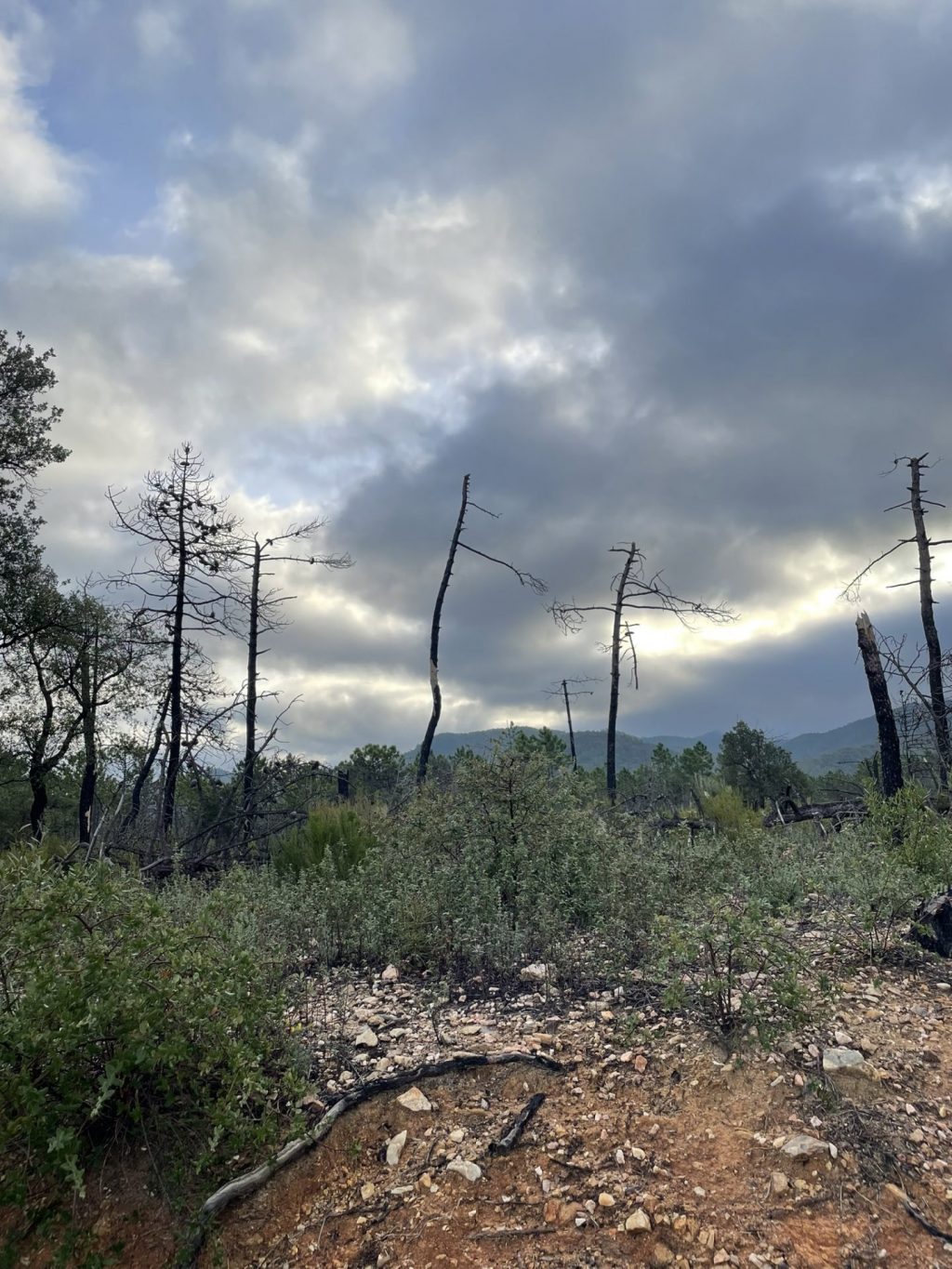
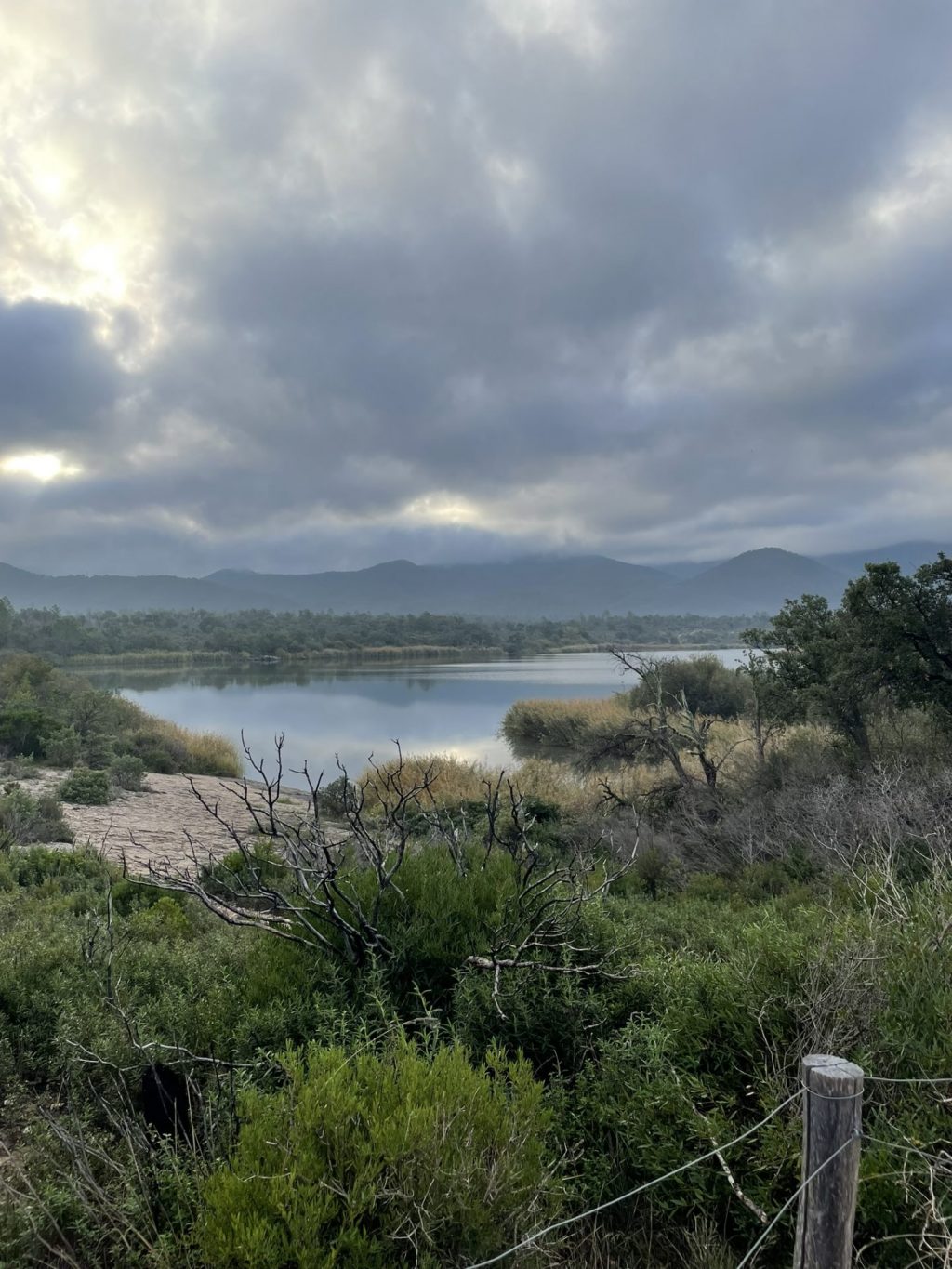
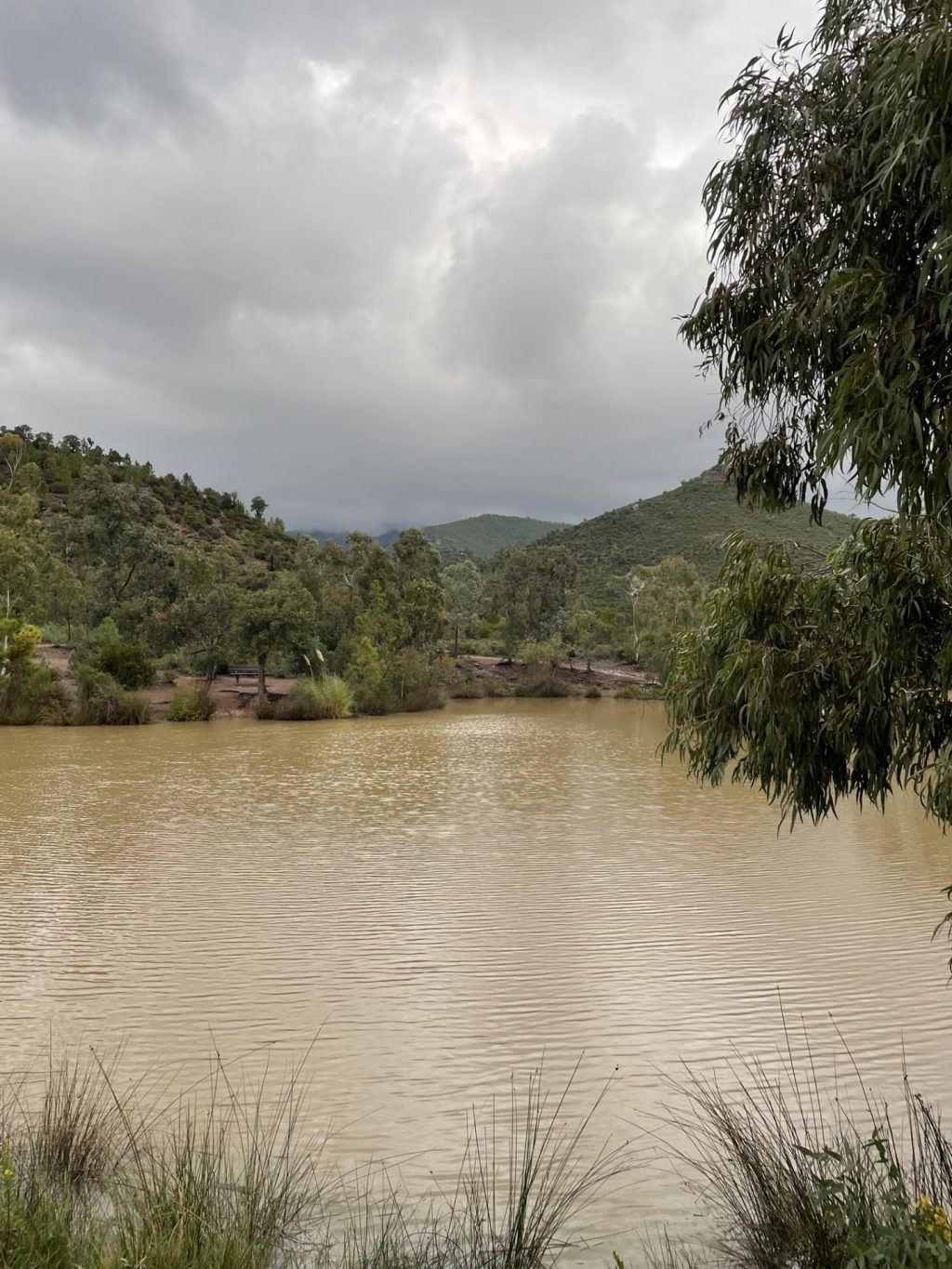
Pictures taken in watersheds affected by wildfires in the Var Department, France (O. Evrard)
These results challenge the consensus that Mediterranean ecosystems consistently return to their pre-fire functioning within the first decade following a fire event, demonstrating instead that a return to initial pre-fire dynamics can take several decades. They highlight that watershed resilience depends heavily on local conditions and on the interplay between geomorphological processes, vegetation regeneration, and post-fire management practices. Beyond their impact on sediment fluxes, these erosion processes also influence the transport of substances associated with the mobilized particles, such as organic matter and contaminants accumulated in soils and vegetation. Thus, post-fire erosion acts as a key process linking the physical transformation of watersheds to the biogeochemical changes observed in the environment.
Overall, these results underscore the significant impact of wildfires on Mediterranean ecosystems and highlight the need to strengthen prevention and post-fire management strategies. Looking beyond the tragic events of the summer of 2026 and considering global warming, projections indicate that wildfires will pose a major environmental and socio-economic challenge in the coming decades. The increasing frequency and severity of fires—driven by the combined effects of climate change and human activity—make integrated risk management at the national level essential. Indeed, the fires currently burning in the Gironde Department and the Fontainebleau Forest illustrate that this issue is no longer confined to Mediterranean regions but affects the entirety of mainland France. By highlighting the long-lasting effects of fires, this study offers novel insights into watershed recovery trajectories; these findings could prove valuable for adapting management policies and mitigating the impacts of major socio-environmental crises in the face of a risk that is set to intensify.
Contact : Romain Ducruet, Anthony Foucher and Olivier Evrard (LSCE)